
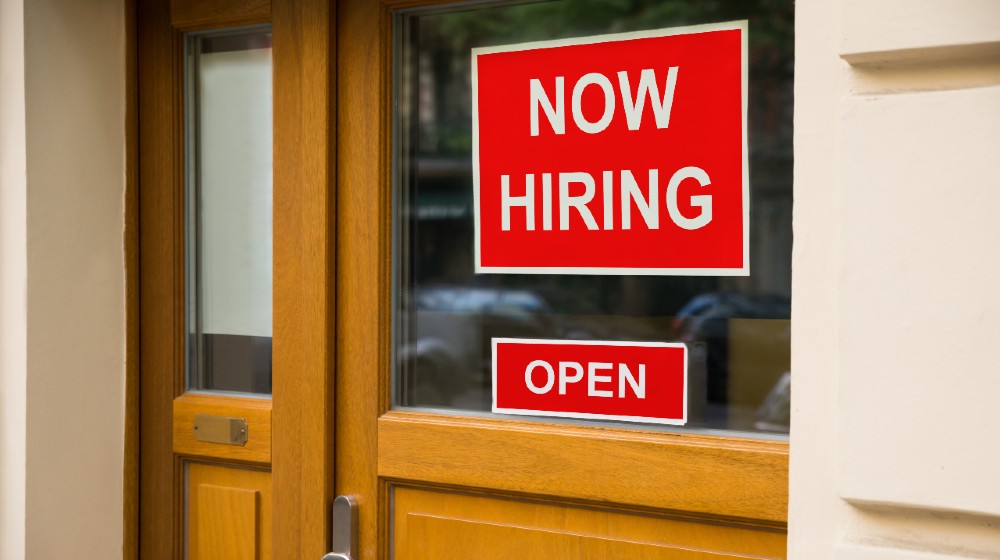

America’s worker shortage woes continue as the April jobs report showed increasing unemployment. Nonfarm hiring generated much lower numbers than expected generated only 266,000 jobs versus an expected 1 million new jobs.
RELATED: Montana To End Extra Jobless Benefits Due to Worker Shortage
Job Report Shows Big Letdown in Hiring
April proved a big letdown on hiring on nonfarm jobs as unemployment rates went up again at 6.1% and went over targets of 5.8%. Many economists expected the job rates to go much higher, signifying that the US economy is roaring back.
Even more bad news arrived at the labor front. The Bureau of Labor Statistics adjusted the original estimate of 916,000 jobs generated last March down to 770,000. However, February jobs also got the makeover, improving from 468,000 to 536,000.
Mild Reaction By Markets
Despite the worse than expected hiring numbers, the markets stayed upbeat. Given the Federal Reserve’s policy to keep interest rates low, Wall Street probably sees unemployment as a short-term issue. JJ Kinahan, the chief market strategist at TD Ameritrade, thinks this situation remains manageable. “It certainly takes the pressure off the Fed and takes an imminent rate increase off the table.
“We’re not going to see inflation in wages,” Kinahan said. “And we don’t have as many people employed as we thought, so we have to keep the party going,” he added. In fact, average hourly wages increased during March. However, the year-on-year averages changed little as more low-wage workers returned to work.
Labor Supply Shortage
Harvard Economist Jason Furman thinks it’s both supply and demand. “I think this is just as much about a shortage in labor supply as it is about a shortage of labor demand.
If you look at April, it appears that there were about 1.1 unemployed workers for every job opening. So there are a lot of jobs out there, there is just still not a lot of labor supply,” he said.
For example, the leisure and hospitality industry posted the most gains for April. However, even as it added 331,000 jobs, the industry still remains short by 2.9 million new ones to match pre-pandemic rates.
Carlos Gazitua, president and CEO of Sergio’s Restaurants in Southern California, bemoans the lack of workers, calling it a crisis. “We’ve increased wages. We have about three different staffing agencies that are constantly looking for people,” he said. “Other restaurateurs are walking around neighborhoods passing out flyers. The heroes in our communities are the people currently working for you and me. These people are burnt out,” he noted.
Other Industry Sectors
The “other services” industry came in next with the most hires at 44,000. This is largely due to an increase in repair and maintenance needs.
The sector also posted gains in personal and laundry services. Meanwhile, local government education added 31,000 jobs as children returned to in-school learning. Then, social assistance increased by 23,000 while financial activities went up by 19,000.
In contrast, professional and business services posted a decline of 111,000 jobs in temporary help. Support services lost 15,000. In addition, courier help lost 77,000 jobs while manufacturing dropped 18,000 positions.
Business Stepping Up Hiring
The disappointing results of the latest jobs report come amid robust economic growth. GDP rose 6.44% in the first quarter of 2021. Consequently, many foresee gains of as much as 10% during the second quarter.
With COVID-19 restrictions relaxed in many areas, businesses accelerated their hiring pace. Many experts see the frenzied job market to continue throughout the summer. New jobless claims last week fell below 500,000 for the first time since the early days of the pandemic.
Watch the TODAY news video reporting on the disappointing April jobs report as some businesses struggle to find workers:
Do you think the April jobs report is something of concern? Why do you think businesses have a hard time getting workers?
Let us know what you think about the current job market in the US. Share your thoughts in the comment section below.