
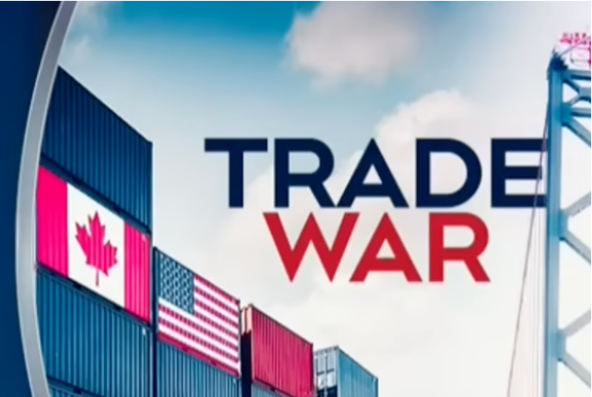

President Donald Trump’s new threat to impose a 35% tariff on Canadian goods is rippling through financial markets and reshaping investor expectations. The announcement late Thursday adds a fresh layer of trade risk at a time when equity valuations are already sensitive to macroeconomic uncertainty. If enacted, the tariff would mark a significant escalation in trade policy and potentially strain cross-border supply chains.
The White House has yet to determine if the proposed measure set to take effect August 1 will only apply to imports not compliant with the US‑Mexico‑Canada Agreement (USMCA). Details remain fluid, but early guidance from the White House suggests a broad interpretation. Market watchers are now analyzing how deeply the tariffs could impact U.S. companies with supply exposure to Canadian goods.
Equity and Sector Impact Already Emerging
U.S. stock futures dipped after the announcement, reflecting immediate investor unease. Gold, a traditional safe haven, gained for a third straight session. While the broader index movements have remained modest, analysts expect more volatility if Canadian retaliation follows. Canada is the largest buyer of U.S. goods and the third-largest source of imports into the country. That deep integration means tariffs will not stay isolated.
Policy Whiplash and Trade Signal Fatigue
Investors are also contending with the broader unpredictability of U.S. trade policy. Just last week, Canadian and U.S. officials expressed optimism about reaching a revised trade and security agreement by July 21. Now, markets must price in the possibility of new tariffs, retaliatory action, and the potential erosion of North America’s integrated production base.
Trump’s tariff threat follows a series of letters sent to trading partners warning of higher duties without new bilateral deals. In an NBC interview, Trump indicated plans to double the default 10% tariff on most countries to as high as 20%. This expands the risk beyond Canada, forcing global manufacturers and retailers to reassess import costs and sourcing strategies.
For companies with exposure to Canadian imports, the concern goes beyond tariff rates. The added uncertainty around compliance rules, enforcement timing, and exemptions creates planning risks that could deter capital investment. Analysts note that supply chains require stable policy to remain efficient. Volatility of this scale could lead firms to delay expansion or shift procurement to secondary markets.
Repricing Risk and Sector Reactions
Wall Street is already adjusting. Bank analysts have flagged Canadian-exposed sectors as vulnerable to short-term drawdowns, particularly in industrials and consumer discretionary. The auto and homebuilding sectors are being closely watched for guidance revisions. Some institutional investors may reduce exposure to companies with high cross-border input reliance or thin margin buffers.
Longer term, investors are asking whether this signals a broader shift toward protectionist trade policy in the lead-up to the November election cycle. If so, large-cap multinationals could face pressure from both higher tariffs and weakening global demand. However, domestically focused firms with low import dependency may benefit, particularly if trade disputes redirect demand toward U.S.-based suppliers.
Canada Mulls Next Moves
Canadian officials responded to the tariff letter with a mix of diplomacy and resolve. Prime Minister Mark Carney said his government would defend national interests while continuing talks. Meanwhile, the country’s opposition leaders condemned the move and warned of reciprocal action. That makes retaliation a realistic scenario that U.S. exporters cannot afford to ignore.
For now, investors will be watching August 1 as a key decision point. Tariffs on Canadian goods may not derail markets on their own, but they amplify a growing list of economic risks that include monetary policy, inflation expectations, and foreign policy instability. Traders, fund managers, and corporate CFOs alike will need to assess how exposed they are before that deadline arrives.
How should investors respond to Trump’s proposed 35% tariff on Canadian goods? Tell us what you think!
Survey