

Source: YouTube
Billionaire investor Mark Cuban has a warning for investors. Today’s market mania, he argues, is more dangerous than the dot-com bubble that made him a billionaire. In a recent email to Axios, Cuban noted that the power of retail traders has surpassed that of analysts, and the line between fundamentals and memes has all but vanished.
Cuban is no stranger to market hype. He famously protected his fortune at the peak of the dot-com boom by hedging his Yahoo shares after selling Broadcast.com for $5.7 billion in 1999. At the time, he sensed that valuations had become unsustainable. His decision preserved his wealth while others watched their gains collapse. Now, he sees troubling signs again, driven not by analysts or institutions, but by risk-hungry retail traders.
Mark Cuban: Everything Is a Meme to Retail Investors
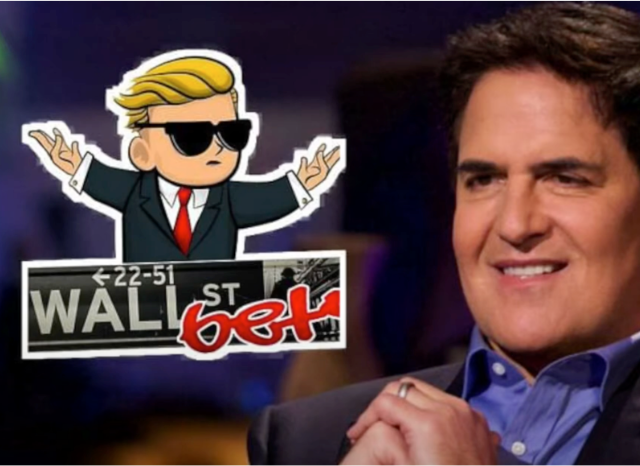
Mark Cuban believes the new risk comes from a generation of traders raised in crypto culture. They treat traditional stocks like meme coins, valuing volatility and virality more than earnings or balance sheets. With social media platforms amplifying trade ideas and online communities forming around stocks, retail investors can now move markets in ways that analysts cannot.
He wrote, “Younger traders are far more risk tolerant than before. They see the volatility of crypto, particularly meme coins, and view stocks as just another version.” In his view, this mindset creates a feedback loop where momentum matters more than substance.
The Dot‑Com Playbook Still Applies
Cuban’s early internet play is now considered one of the best trades in Wall Street history. After the Yahoo deal, he bought protective puts and sold covered calls, locking in his wealth. When Yahoo’s stock crashed, he was insulated. He now draws a parallel between that experience and today’s speculative environment, warning that fundamentals can fade quickly in markets fueled by emotion and crowd behavior.
Even those riding high on today’s momentum should remember that many dot-com companies, once deemed invincible, disappeared almost overnight. Mark Cuban sees shades of this in the current surge of enthusiasm around tech giants and meme favorites.
Institutional Investors Are Paying Attention
Cuban’s comments point to a wider shift. As retail participation continues to grow, institutions are no longer dismissing these trades as noise. Whether it’s GameStop, AMC, or crypto-linked names, retail action can trigger serious price movement. This dynamic challenges the old assumptions about price discovery and portfolio strategy.
Still, Cuban doesn’t dismiss all retail behavior. He sees potential in the democratization of access to tools and platforms. But he warns that hype without discipline leads to eventual losses, no matter how loud the crowd or how strong the trend.
Cuban’s Bottom Line
Mark Cuban’s blunt take that “everything is a meme” shouldn’t be ignored. He’s seen how hype cycles end, and his actions in 2000 offer a blueprint for survival. While markets today are different in structure, the core risk remains the same: betting too heavily on emotion over substance.
Which of Mark Cuban’s warnings about the retail-driven market do you think is most critical? Tell us what you think.