
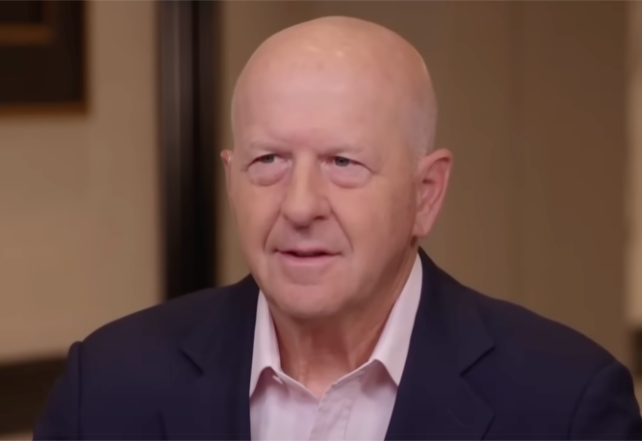

Image source: YouTube
U.S. President Donald Trump publicly criticized Goldman Sachs after the bank’s economists said consumers would shoulder more tariff costs, attacking CEO David Solomon and questioning his leadership. A recent Goldman Sachs analysts recently estimated U.S. consumers absorbed about 22% of tariff costs through June, with the share rising toward roughly two thirds as prices flow through inventories, a finding that prompted The President to dismiss the work as wrong and to say foreign companies and governments bear most costs instead.
Trump amplified his critique by telling Solomon to “focus on being a DJ” and to “get himself a new economist,” short barbs that aim at the bank’s credibility while energizing supporters who see tariffs as leverage rather than a tax on buyers. Because Goldman Sachs shapes market narratives, the exchange matters for positioning in banks and tariff-sensitive sectors. Investors now weigh whether Goldman Sachs research will sway expectations for inflation, margins, and the policy path, or whether political pushback will muddy how firms communicate tariff pass-through.
David Solomon is no stranger to adversity. He joined Goldman Sachs in 1999 and steadily climbed through its top ranks by heading up leveraged finance, serving as co-head of investment banking, then as COO and president before becoming CEO in October 2018 and chairman in January 2019. He later led a firmwide restructuring that streamlined operations, drove a return to core strengths, and ultimately delivered one of the strongest stock performances among U.S. banks. He now faces his biggest challenge to date with President Trump’s dismissive stance against his firm’s findings.
What The Goldman Sachs Research Says About Who Pays
Goldman Sachs framed pass-through as a moving target that shifts with time, contracts, and competitive dynamics; their Sunday note argued consumers’ share rises as businesses stop absorbing costs in margins and adjust sticker prices. That logic aligns with prior experience: companies often eat early shocks, then raise prices as inventories refresh and demand proves resilient. However, sector differences remain large, so investors should separate exposure by import intensity and pricing power rather than apply one blanket assumption to everything.
For Goldman Sachs equity holders, headline risk is real yet usually brief; banks trade more on deal flow, balance-sheet quality, and cost discipline. Nevertheless, when a president challenges Goldman Sachs by name, short-term sentiment can swing, which may widen spreads and raise volatility for a session or two.
Portfolio managers should map tariff channels into earnings. Import-reliant retailers, consumer durables, and electronics vendors face faster pass-through than services or domestically sourced categories. Meanwhile, multinationals with flexible supply chains can blunt hits by shifting vendors or swapping components, though that flexibility takes time and capital.
Will Goldman Sachs Cave In or Double Down?
First, watch any follow-up from Goldman Sachs, including clarifications from chief economist Jan Hatzius, since a methods note or sensitivity table would shape how fast pass-through reaches households. Second, monitor CPI and PCE details for tariff-linked categories, because a few months of firm core services would complicate the narrative that tariffs spare consumers. Third, track corporate earnings commentary on price realization and elasticity; guidance language often signals whether companies still absorb costs or now push through. Finally, keep an eye on further presidential posts naming Goldman Sachs or other Wall Street firms, as repeated blasts can affect communications risk and raise the stakes for future research calls.
Are you adjusting exposure to Goldman Sachs or tariff-sensitive sectors based on this clash over pass-through and pricing power? Tell us what you think.