
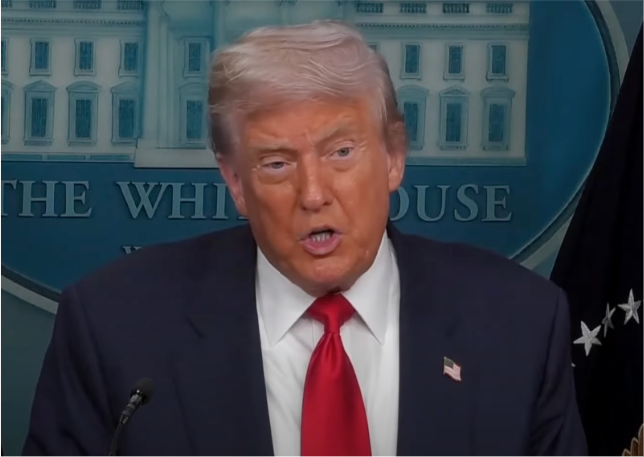

Image source: YouTube
President Donald Trump is leaning into a CEO of America role that places him inside corporate decisions and access talks, with reporting from the Washington Post documenting personal involvement in export approvals, tariff demands, and public pressure on named executives.
This CEO of America persona seems to work so far. Adopting the role helped Trump convert policy goals into visible bargains and immediate leverage. Like a C-suite executive, Trump also links access to conditions, uses public remarks to steer pricing behavior, and turns high-level economics into deal-level negotiations that big corporations cannot ignore.
Direct Presidential Involvement That Sets Terms
The clearest template shows a president who negotiates export licenses with commercial strings attached. In practice, the CEO of America approach ties China chip permissions to revenue-sharing formulas, conditions approvals on product specifications, and positions the White House as the counterparty on ongoing compliance and reporting.
The reach extends beyond export screens and into pricing and research. Trump has told large retailers to absorb tariffs rather than lift tags, and he has criticized bank analysis that conflicted with the administration’s pass-through claims. The CEO of America frame therefore spans operations, narratives, and valuation signals that markets track in real time.
How Corporate Playbooks Are Changing
Large companies are rewriting response plans for a CEO of America environment because leadership attention can move prices within hours. Legal and policy teams map license cadence, monitor tariff triggers, and prepare rapid agency outreach. Investor relations teams time guidance around likely announcements and add language on price realization, country mix, and cash timing.
Operations groups now build more supplier redundancy and faster promotion cycles to protect margin when public directives land. Boards also add scenario reviews that treat presidential posts as catalysts. The CEO of America dynamic rewards firms with flexible sourcing, strong brands, and clean balance sheets that can absorb shocks without forced dilution.
Why This Style Endures and What Expands Next
The White House favors this approach because it trades ambiguity for deals that supporters can measure. The CEO of America model also centralizes credit for outcomes, which strengthens incentives to apply it across sectors where licenses, tariffs, or procurement give the executive branch negotiating power.
Durability, however, depends on business tolerance and legal limits. Companies will accept conditions when the math works and disclosures are defensible to shareholders. They will resist when terms threaten margins or conflict with fiduciary standards. Therefore, the next moves will signal scope: a narrow chip template, or a broader access-for-conditions regime that touches more industries.
Portfolio Implications for Investors
Policy beta becomes a core factor when the CEO of America drives decisions that change revenue timing and country mix. Investors should segment holdings by license dependence, tariff sensitivity, pricing power, and credit flexibility, since those traits determine who absorbs conditions without permanent multiple cuts.
When dealing with the Trump White House, process takes precedence over prediction. Managers should pre-set triggers on yields, spreads, and license headlines, then resize risk quickly and transparently. They should also favor liquidity and limited near-term refinancing, because single-actor decisions can shift approvals or penalties overnight and stress cash conversion.
Should investors treat Trump’s CEO of America model as a durable edge that rewards access, or as policy risk that warrants a lasting valuation discount? Tell us what you think.