


Aluminum hit $3,697 per ton on May 26. That is the highest price in more than four years, and it’s up nearly 49% from this time last year. Rising aluminum prices are being covered as a commodity story. They are actually three separate supply problems happening at once, and two of them will not go away even after a ceasefire gets signed with Iran.
Understanding the difference will help you manage your portfolio better.
Three Problems, Not One
The immediate trigger is the Strait of Hormuz. The Gulf region supplies roughly 9% of global primary aluminum output, and nearly 25% of non-Chinese supply. Since the closure of the strait, Emirates Global Aluminium’s flagship Al Taweelah plant has halted operations after taking direct hits, and is not expected to return to full capacity for approximately 12 months. Bahrain’s ALBA operations are suspended. Citigroup estimates the conflict has removed roughly 3 million tons of annual smelting capacity from the market.
That is the part that could reverse. The part that cannot is China.
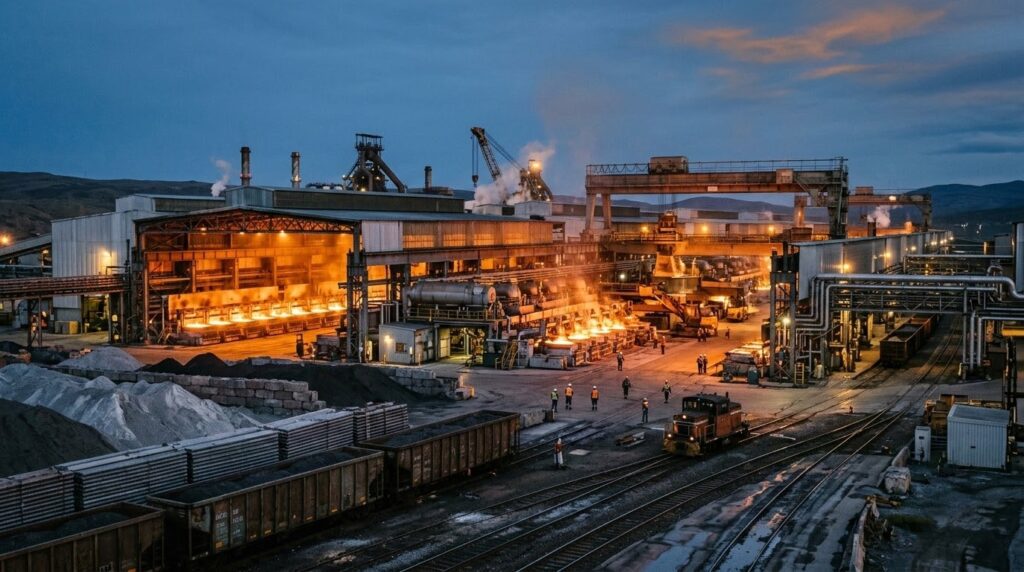
China accounts for approximately 60% of global aluminum output. Beijing imposed a 45-million-ton annual production cap in 2017 to curb overcapacity, and the country is now operating at the ceiling. New greenfield smelters require approvals that are nearly impossible to obtain. Existing capacity that shuts down must be decommissioned before replacement capacity can be approved. And energy competition from AI data centers, which can pay two to three times what smelters can afford for electricity, has created what the industry now calls “paper capacity”: smelters that are technically operational but cannot economically restart.
The third problem connects both: the global aluminum market entered 2026 in a structural deficit of approximately 1.4 million tons. Goldman Sachs raised its second-quarter LME price forecast to $3,450 per ton. UBS revised its supply growth estimate for 2026 down to 0.3%, from a prior estimate of 2.4%. The LME cash-to-3-month spread exceeded $91.50 per ton in April — a level that signals acute physical tightness, not speculative positioning.
This is not a commodity blip. The floor has moved.
It‘s Already in Your Wallet
Rising aluminum prices will not stay in the metals market. They will flow into the income statements of the companies you own and the prices you pay for everyday goods.
Ford now expects commodity cost headwinds exceeding $2 billion in 2026, roughly double its previous estimate — with aluminum as the dominant driver. Ford’s CFO said directly that the surge is clouding the outlook for F-150 production.
Molson Coors reported that rising aluminum prices added approximately $30 million to its first-quarter cost of goods sold compared to the prior year. The company cut its full-year profit forecast by 11 to 15%. Cost per hectoliter rose 8.1% from aluminum alone.
Keurig Dr Pepper’s CFO stated on a call with analysts: “As with many CPG companies, we have both direct and indirect exposure to commodities that have been impacted by the Middle East conflict.”
The all-in U.S. aluminum price — LME benchmark plus the Midwest premium — surpassed $2.70 per pound in April. The 15-year average sits at $1.15 per pound. Aluminum is in beer cans, car frames, building materials, power lines, and EV batteries. When it reprices this sharply, the cost moves through supply chains and eventually reaches consumers.
What Your Portfolio Probably Looks Like Right Now
Here is the gap the data reveals. The average American retail portfolio entered this supply shock with almost no commodity allocation. ETFs represent only 6% of the average investor’s portfolio, and dedicated commodity exposure within that is minimal.
The Invesco DB Commodity Index Tracking Fund returned 47.40% over the past year. Alcoa returned 111.83%. Century Aluminum returned 255.85%.
Most retail investors missed all of it.
That is not a criticism. It is a predictable result of building a portfolio during a period when commodity exposure felt unnecessary. The question now is whether that needs to change, and the answer is not the same for every reader.
For investors looking to understand how consistent accumulation behaves through commodity cycles and supply shocks, Nick Maggiulli’s data-driven framework on staying invested is worth revisiting as an educational resource.


The Case for Responding
The structural argument for adding commodity exposure now rests on three observations.
First, the supply constraints driving rising aluminum prices are not fully reversible. China’s capacity cap does not lift when the Hormuz conflict resolves. Destroyed smelter infrastructure in the Gulf takes a minimum of 12 months to restore. The 1.4-million-ton global deficit was building before the conflict began.
Second, the macro regime supports it. Consumer prices are running at 3.8% year-over-year. Producer prices are running at 6.0%. When inflation is driven by commodity input costs, commodity exposure does not merely hedge inflation — it is part of the same mechanism generating it.
Third, the timing of this for pre-retirement investors is specifically important. An inflationary commodity spike in the early years of a drawdown is not just a portfolio performance question. It is a sequence-of-returns risk event. A portfolio built exclusively for accumulation does not automatically protect purchasing power during a withdrawal phase when commodity-driven inflation is the dominant macro risk.
The Case Against Overreacting
The council is split on this, and the other position deserves a full hearing.
Every investor who holds VOO or VTI already has some exposure to aluminum-linked equities through the S&P 500 materials sector weighting. Adding a commodity ETF after a 49% year-over-year move is not hedging — it is chasing a trade that already ran.
The equity translation of the commodity thesis compounds this problem. Alcoa and Century Aluminum have returned 111% and 255% respectively over the past year. At current valuations, the equity upside is limited even if aluminum prices hold at current levels. The commodity thesis and the equity thesis are different trades, and conflating them is how investors buy producer stocks at peak pricing and then wonder why the stock didn’t follow the metal.
There is also a geopolitical reversal risk that the structural argument sometimes glosses over. If the Strait of Hormuz reopens and the conflict de-escalates, the near-term price catalyst deflates. The structural deficit remains. The momentum does not. An investor who adds commodity exposure at $3,697 per ton faces a real possibility of buying near a short-term high even if the long-term thesis is correct.
This approach works until the geopolitical trigger resolves faster than the market expects.
What This Means for Your Portfolio
The right answer here depends on where you are in your plan, not where aluminum is.
If you are in accumulation with 15 or more years to retirement: Your S&P 500 index exposure already carries some materials sector weight. A 5 to 7% allocation to a broad commodity fund is a legitimate inflation hedge, but it is not urgent. If you act, use a diversified vehicle — DBC or PDBC — rather than single-metal producer equities. Dollar-cost average in over three to six months. Do not size it as a bet on aluminum prices staying elevated. Size it as structural portfolio insurance.
If you are within five years of retirement or already drawing down: This is a different conversation. Commodity-driven inflation in the early drawdown window is a structural threat to a withdrawal plan, not an abstract optimization question. A 7 to 10% risk-contribution allocation to broad commodities — sized by risk, not by dollars — acts as purchasing power insurance in the environment the data currently describes. Concentrated positions in aluminum producers specifically are not the right vehicle for this purpose.
If you want direct equity exposure to the aluminum story: Separate the commodity thesis from the equity thesis before you act. The commodity may stay elevated. The equities have already priced in the bull case. XLB gives you broad materials exposure without concentrating in aluminum producers trading at post-spike multiples. Run your own three-scenario check — base case at $3,500, bull case at $4,000 if the Hormuz disruption extends, bear case at $3,000 if a ceasefire materializes — before sizing any position.
Morgan Housel’s framework on behavioral patterns that repeat across market cycles is directly relevant to the current moment. The impulse to act after watching a commodity run 49% in a year is one of the most documented patterns in investing. Understanding it is not the same as being immune to it.

Frequently Asked Questions
How do rising aluminum prices affect everyday consumer prices?
Aluminum is a component in beer cans, car bodies, building materials, electrical infrastructure, and EV batteries. When the metal reprices sharply, manufacturers absorb some of the cost and pass the rest on. Ford expects more than $2 billion in commodity headwinds in 2026. Molson Coors added $30 million to its first-quarter costs from aluminum alone and cut its full-year profit forecast. Higher input costs move through supply chains and eventually reach consumers through product price increases and margin compression at the companies they own.
What stocks benefit from rising aluminum prices?
Upstream producers that mine or smelt primary aluminum benefit most directly. Alcoa and Century Aluminum are the two largest U.S.-listed names and have returned 111% and 255%, respectively over the past year. The relevant question now is not whether they benefited — they did — but whether their current share prices already reflect the bull scenario. At current valuation levels, the commodity thesis and the equity thesis are not the same trade.
Should I invest in commodity ETFs right now?
The answer depends on your existing financial plan. Investors in long accumulation phases already carry some commodity-linked exposure through S&P 500 materials sector weighting. Pre-retirees and investors in early drawdown phases have a stronger structural case for adding broad commodity exposure as an inflation hedge. A diversified commodity fund carries less single-commodity risk than buying aluminum producer equities after a 49% year-over-year move.
Is the aluminum price surge temporary or structural?
It is both, and the distinction matters. The geopolitical trigger — the Strait of Hormuz closure and Gulf smelter damage — can partially reverse if the conflict de-escalates. The underlying conditions cannot reverse on the same timeline: China’s 45-million-ton production cap is policy, not market behavior. The global deficit of 1.4 million tons was building before the conflict. Smelter restarts are constrained by energy costs and regulatory timelines, not just geopolitics. The floor for aluminum prices has moved structurally higher, even if the spike partially retraces.