
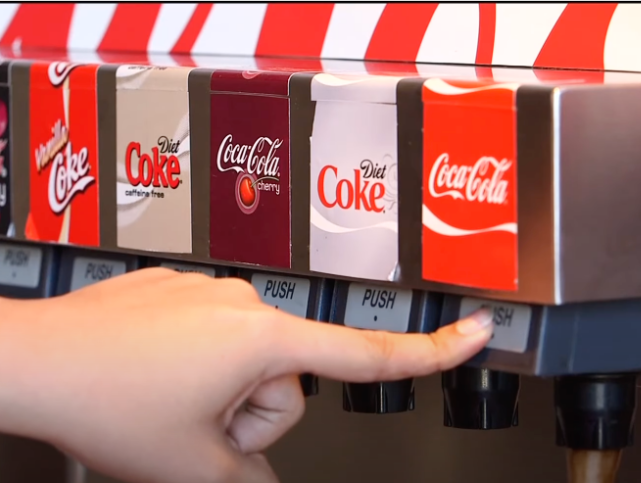

Coca‑Cola stock held firm Wednesday, closing at $69.27, down just 0.14% on the day, despite President Donald Trump claiming the beverage giant will begin using cane sugar in its U.S. products. In a post on Truth Social, Trump said he had spoken with Coca‑Cola and that the company agreed to replace high‑fructose corn syrup (HFCS) with real cane sugar. “It’s just better,” he wrote. Even as Coca‑Cola shares closed the session largely unchanged, companies tied to the corn refining industry such as Archer‑Daniels‑Midland and Ingredion experienced modest declines. Analysts attribute the muted reaction to Coca‑Cola’s ambiguous response and investor skepticism over whether any reformulation will actually occur.
Coca‑Cola Response Offers No Confirmation
Asked about Trump’s post, Coca‑Cola did not confirm the reported change. In a statement provided to multiple outlets, the company said, “We appreciate President Trump’s enthusiasm for our iconic Coca‑Cola brand. More details on new innovative offerings within our Coca‑Cola product range will be shared soon.”
The phrasing left open the possibility of product innovation but made no commitment to altering existing formulations. For decades, Coca‑Cola products sold in the United States have used high‑fructose corn syrup as a primary sweetener. The company increased its use of HFCS in the 1980s in response to domestic sugar costs and trade policy.
Health Secretary Robert F. Kennedy Jr., a vocal critic of HFCS, has linked the ingredient to obesity and other chronic illnesses. His “Make America Healthy Again” initiative has called for removing seed oils, artificial dyes, and corn syrup from processed foods. Trump has aligned with this agenda, stating that removing HFCS would support American health.
The Popularity of Mexican Coke
Coca‑Cola made with cane sugar already exists and enjoys strong demand in the United States. Known as “Mexican Coke,” this version is imported from Mexico and sweetened with traditional sugar rather than HFCS. It is often sold in glass bottles and marketed as having a cleaner taste. The product has developed a cult following among consumers who prefer it to the domestic version.
Retailers routinely stock Mexican Coke in specialty and international sections, and restaurants in major cities advertise it as a premium option. Its appeal is tied to both nostalgia and growing consumer interest in simpler ingredients. Despite its limited market share, the strong reception for Mexican Coke underscores that demand for cane sugar formulations exists.
Coca‑Cola has expanded its global offerings to accommodate regional preferences, using cane sugar in countries like the UK, Australia, and much of Latin America. These variations help the company meet both cultural tastes and national food regulations.
Political, Economic, and Health Tradeoffs
The Corn Refiners Association responded sharply to Trump’s remarks. In a statement, the group warned that replacing HFCS with cane sugar could threaten thousands of American manufacturing jobs and increase reliance on foreign sugar imports. “There is no nutritional advantage to switching sweeteners,” the group said. It also noted that the corn sector contributes to both rural economies and national food security.
While corn syrup has long been a cost‑effective sweetener in U.S. manufacturing, it has also become a lightning rod in health policy debates. If Coca‑Cola were to shift formulations, the company would likely face backlash from agricultural lobbyists and potential cost increases tied to sugar sourcing and trade limits.
Coca‑Cola has already made public commitments to reduce sugar across its beverage portfolio, including through reformulation and new product lines. In an April investor call, CEO James Quincey said the company continues to respond to global health trends with evolving product strategies.
Market Stays Cautious Amid Political Noise
Despite the attention Trump’s post received, Coca‑Cola’s stock remained flat. Analysts believe investors are taking a wait‑and‑see approach, noting that the company’s official statements did not support the claim. Given Trump’s history of public comments about corporate activity, many market participants prefer to base decisions on formal filings and material disclosures.
The lack of a clear timeline or implementation plan has also contributed to investor caution. Without confirmation of a strategic shift, the announcement remains speculative. For now, the company’s core product line and production costs remain unchanged.
Should Coca‑Cola shift back to cane sugar to align with a health‑focused government policy? Tell us what you think.