

Image source: YouTube
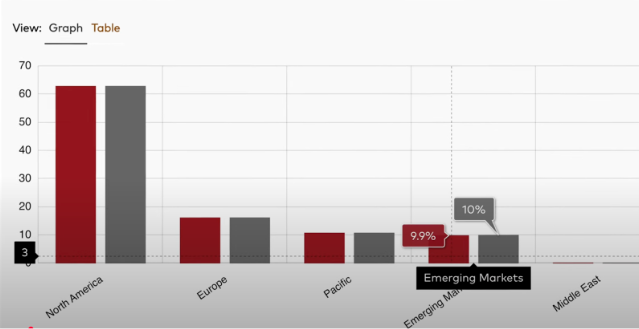
Investors are moving into emerging market stocks as concern grows over stretched U.S. valuations, with Bank of America’s August fund manager survey pointing to a clear rotation into cheaper markets, according to the Financial Times. Emerging market stocks are shares in companies listed in countries that index providers classify as “emerging” based on economic development, market size, liquidity, and investor access. MSCI’s framework and its flagship EM index cover large and mid-cap names across markets such as Brazil, India, Mexico, and South Africa, among others (MSCI; see also the FTSE Russell classification). For investors, that label signals higher growth potential alongside risks like currency swings and governance gaps.
What the New Survey Shows
Bank of America’s August Global Fund Manager Survey reports a sharp shift toward emerging market stocks and away from pricey U.S. benchmarks. The FT highlights investors “piling into ‘cheap’ EM equities,” while MarketWatch notes a record share of managers calling U.S. stocks overvalued, with stagflation concerns elevated. Together, the readings suggest a renewed appetite for value and diversification as the dollar softens and China-sensitive sentiment stabilizes.
The flow picture matters because positioning can amplify moves when momentum builds. If managers are underweight U.S. duration and long global equities, incremental good news in emerging markets can drive outsized gains. Conversely, a stronger dollar or a growth scare can unwind that trade fast, so risk controls remain essential.
Why Invest in Emerging Market Stocks Now?
First, valuation. Emerging market stocks generally trade at lower price-to-earnings ratios than U.S. peers, so even modest earnings delivery can re-rate sectors. Second, macro rotation. When the U.S. dollar eases, local-currency EM returns improve for global investors, lifting flows into emerging market stocks. Third, policy divergence. Several EM central banks began cutting earlier than the Fed, which can boost credit conditions and domestic demand. Finally, breadth. Earnings drivers vary across energy, materials, banks, and tech hardware, which spreads risk compared with the narrow U.S. leadership.
To ground this, macro analyst Jim Rickards, author of Currency Wars and director of the James Rickards Project, has long framed capital rotation as a function of valuation cycles, currency regimes, and risk premia. His background in markets and policy adds context on how dollar trends and policy shocks can swing flows toward cheaper geographies (profile | bio).
Emerging market stocks move with currencies and politics. A sudden dollar spike can cut foreign returns even if local prices rise. Policy missteps, capital controls, or election surprises can hit sectors unevenly. Commodity swings also matter. Oil importers and exporters react in opposite ways, so country selection and hedging can’t be afterthoughts. These are manageable risks, yet they require discipline.
Where Emerging Market Stocks Leave Investors
For asset allocators, the message is not “all-in.” It is to revisit baseline weights in emerging market stocks, then consider whether today’s relative pricing, currency backdrop, and earnings path justify a modest tilt. Index trackers offer broad exposure, while active strategies can target catalysts in banks, consumer platforms, or exporters. Either way, position sizing, stop-loss rules, and currency hedges deserve a fresh pass while sentiment favors EM.
Are you increasing your allocation to emerging market stocks while U.S. valuations run hot? Tell us what you think.