
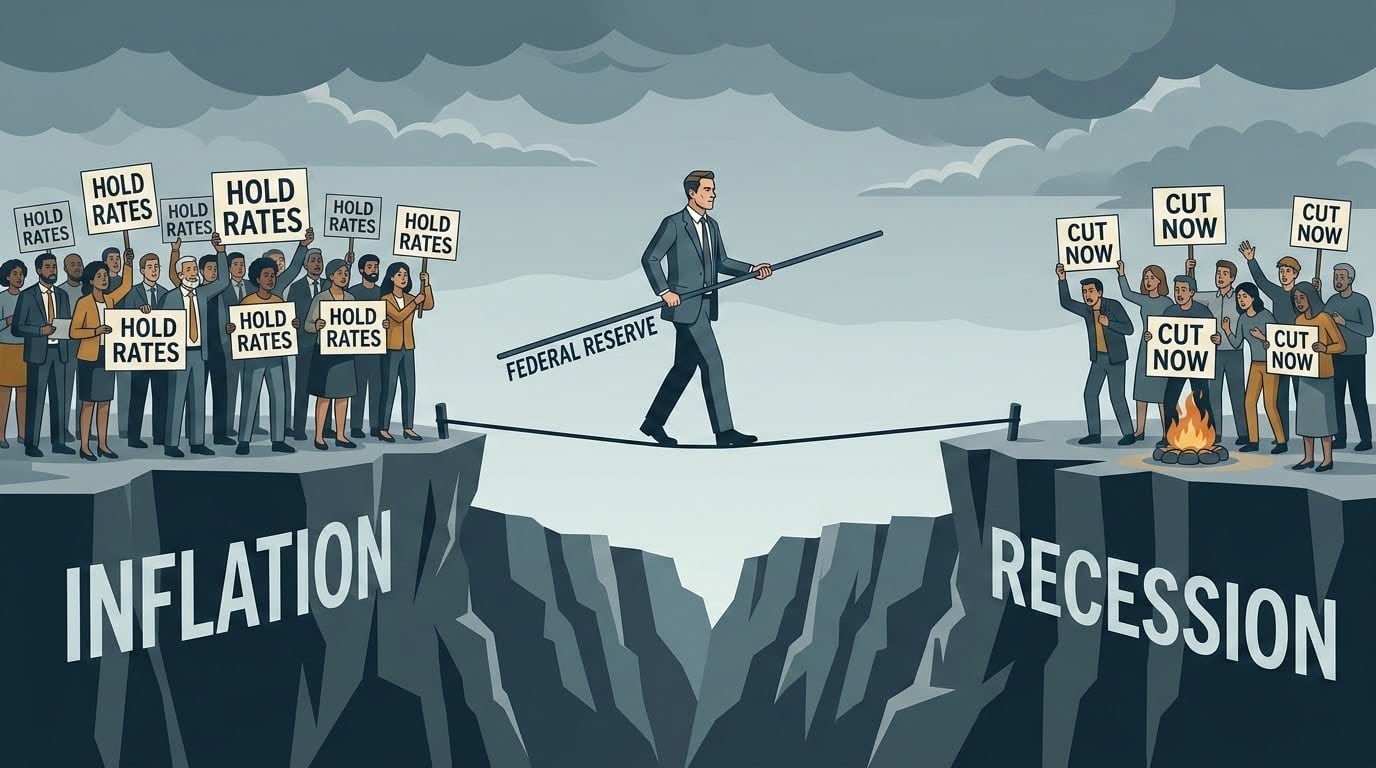

QUICK SUMMARY: Bank of America no longer expects Fed rate cuts in 2026, pushing its first projected cut to July 2027. The reversal follows April’s stronger-than-expected jobs report, inflation running at 3.8%, and an 8-4 FOMC split. Goldman Sachs, Barclays, and JPMorgan have made similar moves. The June FOMC meeting is set for June 16-17. Here’s what investors need to do before it arrives.
The rate cut timeline just moved again, this time by nearly a year.
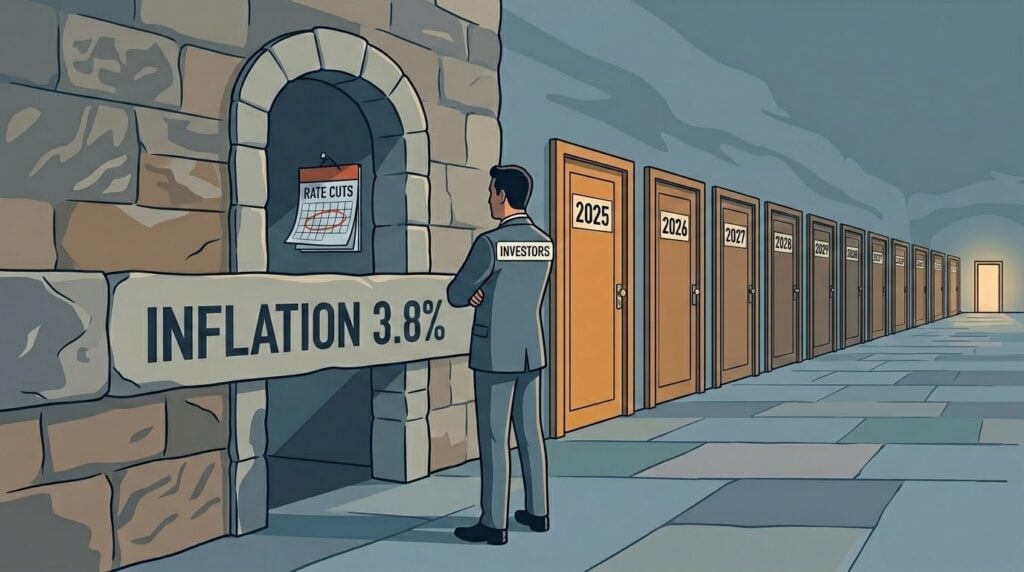
Bank of America’s economics team said on May 8 that it no longer expects any Fed rate cuts in 2026, pushing its first projected cut to July 2027. That is a sharp reversal from its earlier call for two cuts beginning this September. Since December 2025, the federal funds rate has been 3.5% to 3.75%, and on its current trajectory, it will remain there well into next year. With the June FOMC meeting 34 days away, here is what investors need to know before it arrives.
Why Did Bank of America Push Its Fed Rate Cuts Forecast to July 2027?
The proximate trigger was April’s jobs report. Employers added 115,000 jobs against forecasts of 65,000, and the unemployment rate held at 4.3%. A weak report might have kept the easing window open for later this year. This one closed it. Aditya Bhave, head of U.S. economics at Bank of America, put it plainly: “The data simply don’t warrant cuts this year. Core inflation is too high and moving up. The solid April jobs report was the last straw.”
Inflation is running at 3.8%, well above the Fed’s 2% target. Brent crude has risen roughly 40% since the Iran war escalated in late February, moving from the low $70s per barrel to near $100. That oil shock has not yet fully passed through to consumer prices, which means the inflation picture at the June and July meetings could look worse before it looks better.
Bank of America now expects the first Fed rate cut no earlier than July 2027, citing 3.7% inflation and an April jobs report that came in nearly double Wall Street’s forecast.
Are Other Major Banks Also Expecting a Rate Hold Through 2027?
Bank of America is not an outlier. The shift is a broad institutional consensus. Goldman Sachs now expects the first Fed rate cuts no earlier than December 2026, with a second in March 2027. Barclays has abandoned its September cut call entirely and moved to March 2027. JPMorgan is the most hawkish of the major banks: it expects the Fed to hold all year, with the next Fed rate cuts potentially 25 basis-point hikes. CME Group’s FedWatch tool shows less than a 50% probability of any Fed rate cuts before the second half of 2027 and a 40.5% probability of a hike by April 2027. Deutsche Bank’s economists noted: “Trend inflation has not shown clear signs of dipping below 3%.”
Goldman Sachs, Barclays, JPMorgan, and Deutsche Bank have all moved to comparable positions, making this the broadest Wall Street consensus on a rate hold in years.
What Should Investors Watch at the June FOMC Meeting?
The June 16-17 meeting will be Kevin Warsh’s first as Fed chair, and the dynamic inside the committee is more fractured than at any point since 1992. The April 29 vote to hold was 8-4, with three regional presidents dissenting because they objected to language in the post-meeting statement they read as an easing signal. Bank of America’s note captures the tension directly: “We think Warsh will push for lower rates, but the data flow precludes cuts for now.”
The single thing worth watching in the June statement is whether that easing bias language survives. If it disappears, the hawks have consolidated control of the narrative, and the 2027 timeline hardens further.
The line to watch in the June 16-17 statement: if easing bias language is removed, the rate hold through 2027 is effectively confirmed.
Is the BofA Forecast Likely to Be Right?
There is a legitimate counterargument, and it does not come from optimists hoping the Iran situation resolves quickly. Every major Wall Street forecast on Fed timing has been wrong in the last four years, in both directions. Investors who restructured their portfolios around the 2022 rate hike forecast outperformed briefly, then underperformed when the pivot arrived faster than expected. The data on buying consistently during prior high-rate holds, including 1979 to 1982, 1994 to 1995, and 2022 to 2023, shows that contribution discipline outperforms rate-timed deployment in the majority of historical windows.
The counterargument is not that BofA is wrong. It’s that restructuring your portfolio around a Wall Street rate forecast has a poor track record regardless of which direction that forecast points.
How Should You Position Your Portfolio If the Fed Rate Cuts Hold Through 2027?
The right response depends on where you are in your investing life.
If your time horizon is 10 years or longer, the forecast does not change your strategy. Automating monthly contributions into broad index funds has outperformed rate-timed deployment in the majority of historical periods. The rate environment changes the short-run noise, not the long-run math. Keep buying.
- If you are within five years of retirement, the calculus is different. Fed rate cuts being pushed to 2027 means the bond recovery that would normally replenish a mid-term spending bucket is delayed by a comparable amount. Three specific moves are worth considering now. First, shorten bond duration: intermediate-term bond funds carry less rate sensitivity than long-duration holdings in a prolonged hold environment. Second, review your near-term cash position: if you have less than one to two years of expenses in cash or short-term instruments, current T-bill yields make funding that position productive while you wait. Third, do not rotate out of equities in response to the rate hold. Locking in losses to sit in cash while waiting for a better rate environment is historically one of the worst trades a pre-retiree can make.
- For investors holding individual equities, the repricing risk is concentrated in a specific place: companies valued with near-term rate relief already baked in. Highly valued growth names, long-duration technology, and rate-sensitive REITs are the most exposed. Financials with expanding net interest margins, energy, and short-duration dividend payers are structurally better positioned for this regime.
For investors who want the quantitative case behind that position, Nick Maggiulli’s Just Keep Buying is the most rigorous data-driven argument for contribution discipline regardless of market conditions.


Investors within five years of retirement should prioritize funding 12 to 24 months of expenses in cash or short-term instruments before the June meeting, not after it.
The June FOMC will not deliver a rate cut. The question is what the statement tells us about how long the Fed rate cuts hold lasts. Build your portfolio for the answer you are most likely to get, not the one you are hoping for.
For educational purposes only. Not financial advice.
Frequently Asked Questions:
What is the current federal funds rate?
The federal funds rate is currently 3.5% to 3.75%, where it has remained since the Fed’s last cut in December 2025 across three consecutive hold decisions.
When did the Fed last cut interest rates?
The Federal Reserve last cut rates in December 2025, lowering the federal funds rate by a quarter point. Three consecutive holds have followed since then.
What would it take for Fed rate cuts to happen before July 2027?
Two conditions would move the timeline forward: a meaningful and sustained decline in inflation below 3%, or a significant deterioration in the labor market pushing unemployment materially above 4.5%. Bank of America says neither condition is visible in current data.
Should I move to cash while Fed rate cuts are delayed?
The historical record argues against it. Consistent investment into broad index funds during prior high-rate holds outperformed cash-waiting in the majority of historical periods. Short-term Treasury bills and high-yield savings are productive for cash you need within 12 months. Holding long-term investment capital in cash while waiting for a rate cut catalyst has a documented track record of underperformance.