

Source: YouTube
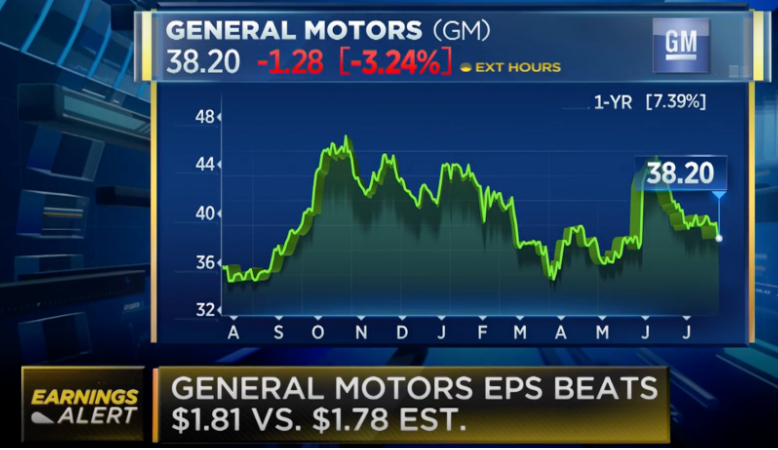
General Motors has cut its 2025 earnings forecast sharply, warning that new tariffs will cost the company up to $5 billion this year. The announcement, which followed a delayed earnings report and shareholder letter, signals a shift in strategy as GM tries to absorb a direct hit from President Trump’s 25 % auto import duties.
CEO Mary Barra told CNN that General Motors does not expect to pass the full cost burden onto consumers. “We believe pricing is going to stay about the same,” she said, while acknowledging that pricing in the industry is fluid and reacts to monthly shifts in demand and supply. Still, Barra confirmed that GM is adjusting its operations and outlook in response to Trump’s trade policy.
The company now expects to earn between $10 billion and $12.5 billion in adjusted EBIT, down from a previous forecast of $13.7 billion to $15.7 billion. It has also paused further stock repurchases, a signal that capital preservation is a near-term priority. These actions mark a notable shift for General Motors, which posted $12 billion in net income just last year.
How GM Plans to Offset the Tariff Blow
General Motors has already started to realign parts of its manufacturing footprint. Production of certain pickup models has been shifted from Mexico to its Fort Wayne, Indiana plant, adding 50,000 units annually. The company is also boosting battery module assembly in the U.S. and sourcing more components from domestic suppliers to comply with the U.S.–Mexico–Canada Agreement (USMCA).
Despite these efforts, CFO Paul Jacobson noted that only about 30 % of the expected tariff cost will be offset in the near term. The rest will eat into profits, especially given GM’s reliance on imported parts. Last year, GM built 1.7 million vehicles in the U.S., but many of those were assembled using components from South Korea, Canada, and Mexico. American-made content accounts for just 54 % of GM’s U.S.-built vehicles on average.
Barra acknowledged the difficulty of reshoring supply chains quickly but said GM remains committed to increasing U.S. production. She emphasized that further steps are under review, but offered no timeline. In the meantime, GM welcomed recent tariff adjustments from the Trump administration, which offer partial offsets for certain U.S.-built vehicles and parts.
Impact on Other Automakers and Sector Outlook
General Motors is the first major automaker to disclose a detailed financial impact from the tariffs, but it likely won’t be the last. Companies like Toyota, Mercedes-Benz, and Stellantis are already reevaluating their U.S. production plans. Some, like Mercedes, have announced new models tailored for American plants. Others may follow with moves designed to reduce their tariff exposure.
Investor sentiment across the sector remains cautious. The cost of compliance, rising logistics expenses, and unpredictable trade shifts are pushing automakers to prioritize flexibility over expansion. Meanwhile, fears of softer consumer demand are also tempering expectations for pricing power. Interest rates remain high, and there’s little fiscal stimulus available to support auto sales in the months ahead.
Analysts expect a pullback in second-half vehicle sales, especially as the early-year surge driven by tariff anxiety tapers off. If demand weakens, automakers may face a double hit: higher costs from tariffs and lower margins from price cuts or incentives.
What Investors Should Watch Now
General Motors is staying the course with its capital spending, planning to invest $10 to $11 billion this year, primarily in EV platforms and battery technology. While the company is not exiting long-term bets, it is clearly adjusting to short-term headwinds. The decision to pause stock buybacks is a key signal that GM is shifting into preservation mode.
For investors, this is a moment to assess how well each automaker can absorb shocks and reconfigure its supply chain. Companies with a higher percentage of U.S. sourcing, flexible manufacturing, and access to domestic capital may weather this storm better than those more globally exposed.
General Motors continues to serve as a leading indicator in the industry. Its strategic responses of shifting production, controlling pricing, and maintaining investor communication provide insight into how major automakers will navigate trade turbulence moving forward. But with tariffs set to stay in place for now, investors should prepare for margin pressure and ongoing volatility across the sector.
Is General Motors making the right moves to protect shareholder value under President Trump’s trade policy? Tell us what you think!
Survey: