
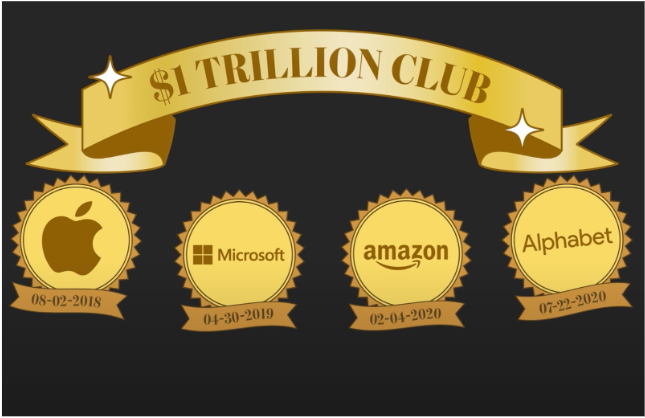

Image source: YouTube
The “Ten Titans” is the latest expansion of Wall Street’s fascination with mega-cap growth, building on the Magnificent Seven narrative by adding Oracle, Netflix, and Broadcom to the mix. Analysts now predict all ten companies could surpass $1 trillion in market value by 2030, setting up a fresh round of debate on how concentrated gains are reshaping the market.
The projection underscores how investor attention continues to cluster around a handful of companies with global reach and pricing power. The original Magnificent Seven: Apple, Microsoft, Alphabet, Amazon, Meta, Tesla, and Nvidia each already make up a substantial portion of the S&P 500’s value. By extending the group to ten, analysts acknowledge that additional players are demonstrating similar growth trajectories and sector influence.
Sector Strength Behind the Ten Titans
The inclusion of Oracle, Netflix, and Broadcom broadens the list beyond consumer technology giants. Oracle’s expansion in cloud computing and enterprise software places it in direct competition with established leaders like Microsoft and Amazon. Netflix, after weathering subscriber volatility, has proven its ability to monetize streaming through price adjustments and content expansion. Broadcom’s position as a semiconductor powerhouse benefits from surging demand tied to artificial intelligence, networking, and 5G adoption.
Together, these three names give the Ten Titans a wider sector footprint, ranging from semiconductors and software to media and entertainment. That diversification may provide resilience if one industry slows, though it also raises questions about whether each company can maintain the rapid growth needed to achieve trillion-dollar status. Investors tracking the Ten Titans should consider not only the strength of each sector but also how cyclical risks might disrupt projections over the next five years.
Valuation Risks and Growth Opportunities
While the trillion-dollar projection highlights the scale of opportunity, it also magnifies concerns about valuation. Many of the Ten Titans trade at elevated multiples, reflecting optimism about future earnings. Nvidia remains the most obvious case, with its soaring stock price fueled by AI-driven demand for data center chips. Tesla has also drawn scrutiny as investors weigh its ability to sustain growth amid fierce competition and slower EV adoption.
Oracle and Netflix, meanwhile, carry questions of their own. Oracle must prove that its cloud business can compete with Amazon Web Services and Microsoft Azure. Netflix is banking on international growth and advertising revenue, but its market leadership faces rising competition from other streaming platforms. Broadcom benefits from structural demand, yet chip cycles have historically been volatile and sensitive to macroeconomic conditions.
These dynamics raise the critical investor question: are the Ten Titans priced for perfection, or is the trillion-dollar forecast a realistic reflection of durable growth? Bulls argue that each company’s global footprint and innovation pipeline justify the valuations. Bears warn that any earnings disappointment could trigger steep corrections, especially given the heavy index weighting of these stocks.
Investor Implications
For long-term investors, the Ten Titans represent both opportunity and concentration risk. Their combined weight in major indexes means they will heavily influence portfolio performance whether investors own them directly or through funds. Active investors may see a chance to ride the momentum, while cautious investors will question whether this level of concentration creates systemic vulnerability.
The path to $1 trillion for all ten stocks will likely hinge on sustained innovation, stable economic conditions, and investor willingness to keep rewarding growth at high valuations. While the forecast reflects optimism about technological transformation, it also highlights the challenge of maintaining that trajectory in the face of global competition and regulatory scrutiny.
Do you see the Ten Titans as a once-in-a-generation investment opportunity, or are they a bubble in the making? Tell us what you think.