
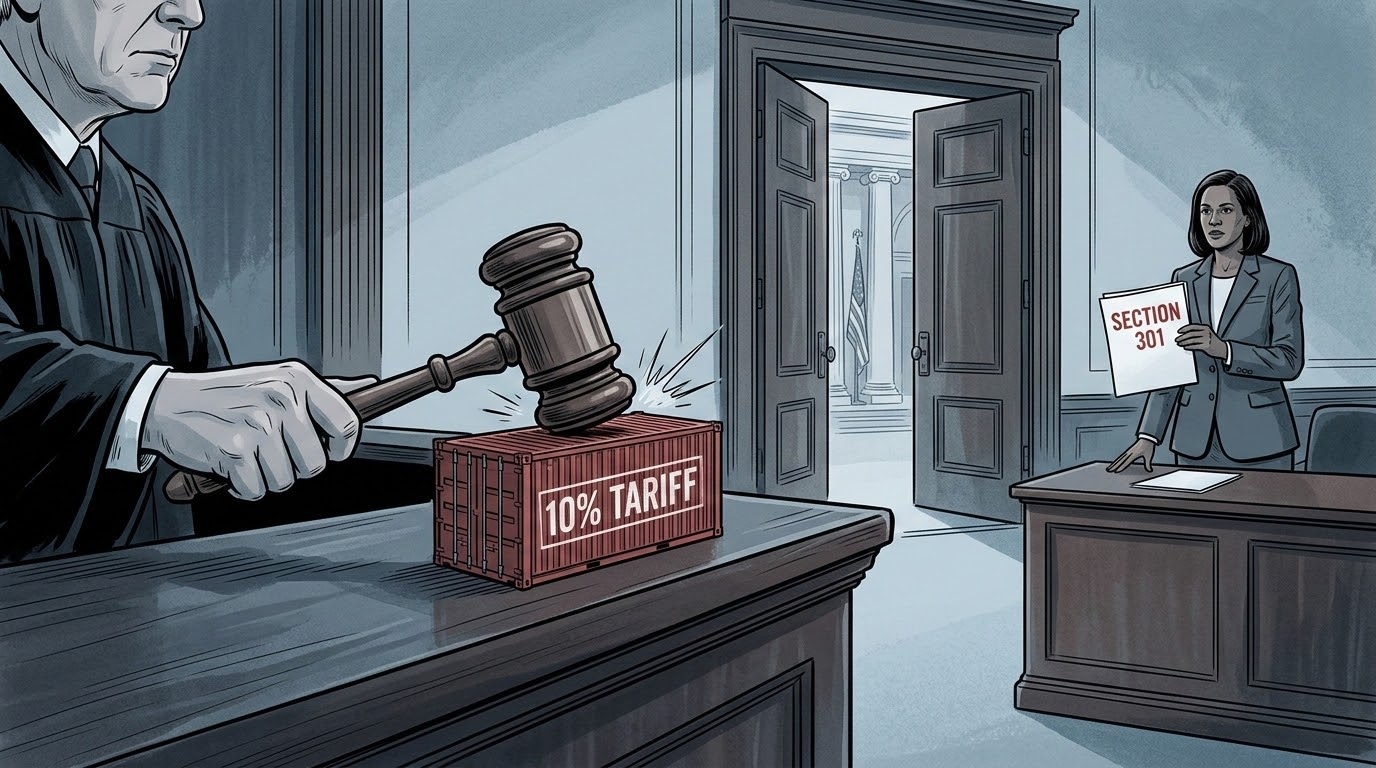

QUICK SUMMARY: A federal court ruled Trump tariffs illegal for the second time in 2026, finding Section 122 of the Trade Act of 1974 legally insufficient. The 2-1 decision by the U.S. Court of International Trade covers only two importers and Washington State. All others keep paying the 10% duty while the DOJ appeals. The tariffs expire July 24, and a permanent Section 301 replacement may already be in the pipeline.
A federal court ruled Trump tariffs illegal on Thursday, delivering the second major legal blow this year to the administration’s trade agenda. The U.S. Court of International Trade found, in a 2-1 decision, that the 10% across-the-board tariff package lacked the legal justification required under Section 122 of the Trade Act of 1974. That law allows emergency trade measures only in response to a large and serious balance-of-payments deficit. The court said the administration never demonstrated one existed.
The ruling is significant. Its reach is narrow.
It currently applies to two private importers, toy company Basic Fun! and spice importer Burlap and Barrel, and the State of Washington. Every other importer in the country keeps paying the 10% duty while the appeal plays out.
What Did the Federal Court Actually Rule About Trump’s Tariffs?
The administration imposed the Section 122 tariffs in February 2026, immediately after the Supreme Court struck down its prior tariff package enacted under emergency economic powers. That earlier package covered far broader ground. Section 122 was designed as a 150-day stopgap, buying time while the administration built its next trade strategy.
The Court of International Trade rejected the legal rationale Thursday. The presidential proclamation establishing the tariffs, the majority ruling noted, identified no qualifying balance-of-payments crisis as Congress defined that term when it wrote the law. One judge partially dissented, arguing the case arrived too early. The majority disagreed and ordered the tariffs halted — but only for the plaintiffs.
Why Are You Still Paying the 10% Tariff After the Ruling?
The Department of Justice filed its appeal within hours. That filing keeps the 10% tariff in place for all other importers while the courts work through the challenge.
The tariffs expire July 24 regardless of how the appeal resolves. That expiry date matters more than the ruling.
“The administration will appeal this decision but it will continue collecting most of the 10% tariffs under Section 122 until July 24, at which point we will likely have permanent Section 301 tariffs in place,” said Ryan Majerus, a former senior U.S. Commerce official now with law firm King and Spalding.
That is the sentence to read twice. Section 301 authority has historically survived every court challenge. If a permanent package under that authority arrives July 24 as signaled, the legal fight over Section 122 becomes a footnote.
Is This a Pattern and What Does It Mean for Trade Policy?
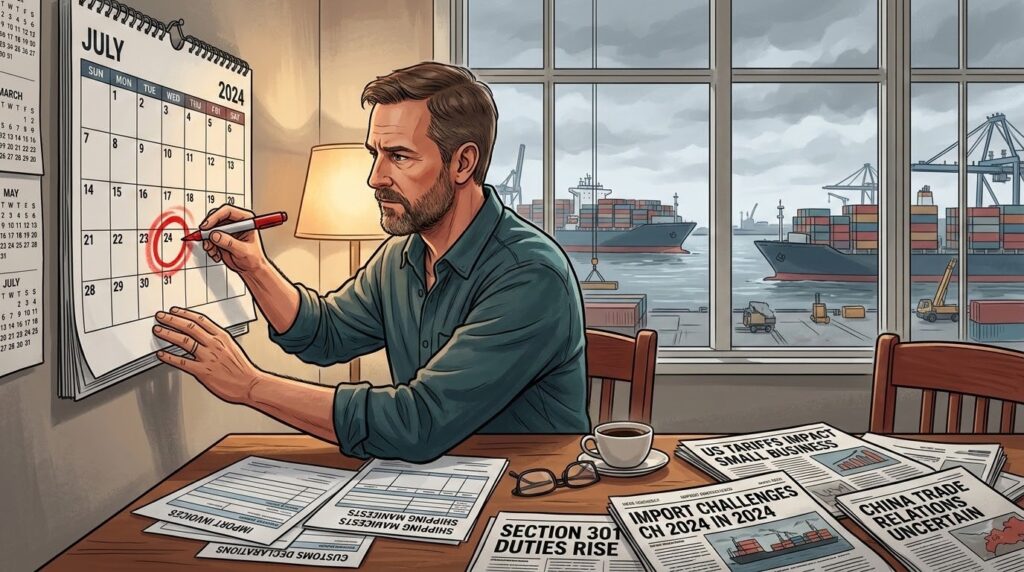
This is the second time in 2026 a court has ruled a Trump tariff package illegal. First the Supreme Court on IEEPA. Now the Court of International Trade on Section 122. Each time, the tariffs survive in practice while the legal vehicle changes. The costs do not.
Former International Monetary Fund First Deputy Managing Director Gita Gopinath said at the time of the Section 122 imposition: “We can all agree that the U.S. is not facing a balance-of-payments crisis.” The court agreed Thursday. The administration was already working on the next vehicle before the ruling was issued.
The pattern matters more than any single ruling. Tariff uncertainty is not resolving. It is shifting legal vehicles. For more on how that uncertainty has affected business confidence over the past year, see our prior coverage: Trump’s Tariff Pronouncements Trigger Revolt Among Global Business Leaders and What Tariffs? China Trade Surplus Hit Nearly $1 Trillion in 2024.
What Happens to Trump’s Tariffs After July 24?
July 24 is the decision point your portfolio needs to plan around, not this ruling.
Two scenarios are in play. If the tariffs expire on that date without a permanent replacement, import-dependent sectors get cost relief and long-horizon investors who held through the noise come out ahead. If Section 301 permanent tariffs arrive in July as one former Commerce official has already telegraphed, cost pressure on consumer discretionary, industrials, and import-dependent businesses extends into 2027 and beyond.
Long-term investors should note: investors who shifted their portfolios on every tariff announcement in 2025 underperformed the subsequent recovery by roughly 7% in the six months that followed. Reaction is not a strategy. The index absorbs tariff legal battles over a 10-year horizon. Whether it absorbs a permanent tariff regime is the question worth answering before July.
The legal vehicles keep changing. The investor behaviors that build or cost wealth during sustained uncertainty do not. Same as Ever is an educational resource built around that distinction.


Should Investors or Business Owners Act on This Ruling?
For long-term investors, the answer is probably not. The ruling itself is not a portfolio trigger. The July 24 expiry and any Section 301 replacement are the events worth positioning around before they arrive.
For business owners, the calculus is different. Supply chain decisions do not wait for appeals courts. Vendor contracts and logistics retooling carry a 3 to 6-month implementation lag. Modeling your cost structure across three outcomes is work that needs to happen before the deadline, not after it.
- Tariffs expire cleanly
- Section 301 arrives
- Appeal extends into Q4
A finding of Trump tariffs illegal for the second time this year is a pattern, not an endpoint. The investors positioned for July are watching the calendar. The ones reacting to the ruling are watching the wrong thing.
TheCapitalist.com participates in the Amazon Associates program and other affiliate partnerships. If you purchase through our links, we may earn a commission at no additional cost to you. See our affiliate disclosure.
For a framework on building a portfolio that holds through sustained policy uncertainty, Same as Ever is an educational resource worth your time. No products found.
For educational purposes only. Not financial advice.
Frequently Asked Questions:
Are Trump’s 10% tariffs still being collected after the court ruling?
Yes. The ruling applies only to two private importers and the State of Washington. All other importers continue paying the 10% duty while the Department of Justice appeal works through the courts.
What is Section 122 and why did the court rule against it?
Section 122 of the Trade Act of 1974 allows a president to impose tariffs up to 15% for up to 150 days to address a large and serious balance-of-payments deficit. The court ruled the administration failed to demonstrate a qualifying deficit existed when it imposed the tariffs in February 2026.
What is the difference between Section 122 and Section 301 tariffs?
Section 122 authorizes short-term tariffs of up to 15% for up to 150 days to address a balance-of-payments deficit. Section 301 authorizes broader, longer-term tariffs in response to unfair trade practices — and has consistently survived legal challenges that Section 122 has not.
What happens to Trump tariffs after July 24?
The 10% Section 122 tariffs are scheduled to expire on July 24, 2026, regardless of how the appeal resolves. A former senior U.S. Commerce official has said publicly that permanent Section 301 tariffs will likely be in place by that date.
Should I change my investment portfolio because of the tariff court ruling?
The ruling itself is not a portfolio trigger. The July 24 expiry and any Section 301 replacement are the events worth positioning around before they arrive. Investors who reacted to every tariff announcement in 2025 underperformed the subsequent recovery by roughly 7%.