
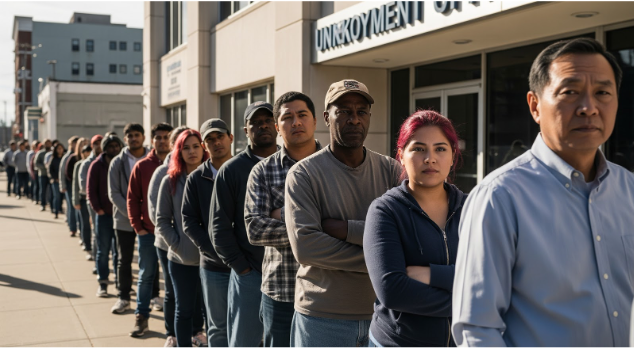

Unemployment benefits filings rose during the week ending August 16, offering investors one of the first real-time signals that hiring conditions may be cooling. The Labor Department reported that jobless claims increased modestly but remain in a range consistent with past years. While that shift suggests softening at the margin, the other half of the labor story remains intact: layoffs are still unusually low by historical standards.
That divergence complicates the outlook for markets. For months, economists have predicted that higher borrowing costs and trade disruptions would pressure the job market. Instead, employers are cutting workers at a much slower pace than in previous cycles. The latest data forces investors to reconcile rising claims with continued retention, an imbalance that shapes everything from rate expectations to sector positioning.
Why This Week’s Claims Data Draws Market Attention
Weekly unemployment benefits filings are among the most immediate indicators of labor strength. Unlike payrolls, which come monthly, claims show real-time pressure on workers. An uptick like the one reported for the week ending August 16 often fuels concern that broader weakness could follow. Markets took notice, as futures implied stronger odds that the Federal Reserve could justify easing if claims climb further.
Yet investors should also note that single-week shifts rarely determine policy. Fed officials typically want to see sustained changes before shifting direction. That means claims data must continue trending higher to confirm genuine softening. For now, the increase adds to a picture of gradual cooling but does not prove that a downturn is imminent.
Layoffs Tell a Different Story About Employer Behavior
Despite higher claims, layoffs remain well below recessionary benchmarks. Employers appear reluctant to part with workers after years of shortages in sectors like trucking, healthcare, and construction. That discipline suggests that labor hoarding is still common, which in turn supports consumer demand.
For investors, this resilience matters. A company keeping staff despite softer growth signals that wage income will continue flowing into spending. That dynamic can help sustain demand for staples and services even if hiring slows. However, if claims continue to build, employers may eventually follow with cuts—bringing layoffs into alignment with rising applications. Until then, the labor market looks mixed rather than fragile.
How Investors Should Read Policy and Market Implications
The Federal Reserve will factor claims and layoffs into its broader outlook on inflation and growth. Persistent increases in benefits filings could strengthen the case for rate cuts, especially with political pressure from the White House mounting. At the same time, cutting too soon risks reigniting inflation if the labor market proves more resilient than it looks.
This uncertainty gives investors reasons to be selective. Sectors tied to discretionary spending could face pressure if households grow cautious. Defensive areas like utilities and consumer staples may hold steadier. Bond investors might lean toward Treasurys as a hedge against risk-off shifts, while still preparing for volatility if policy signals diverge from data.
What Investors Should Watch Out For
The key question is whether unemployment benefits filings continue rising in late August and into September. If the claims trend up consistently, and layoffs eventually follow, that would confirm a slower labor market. But if layoffs stay low, the story becomes one of modest cooling rather than sharp deterioration. For now, the balance still tilts toward resilience, but the trajectory is becoming more uncertain.
Is the rise in unemployment benefits the start of a weakening labor market, or do low layoffs show resilience that supports continued growth? Tell us what you think.