
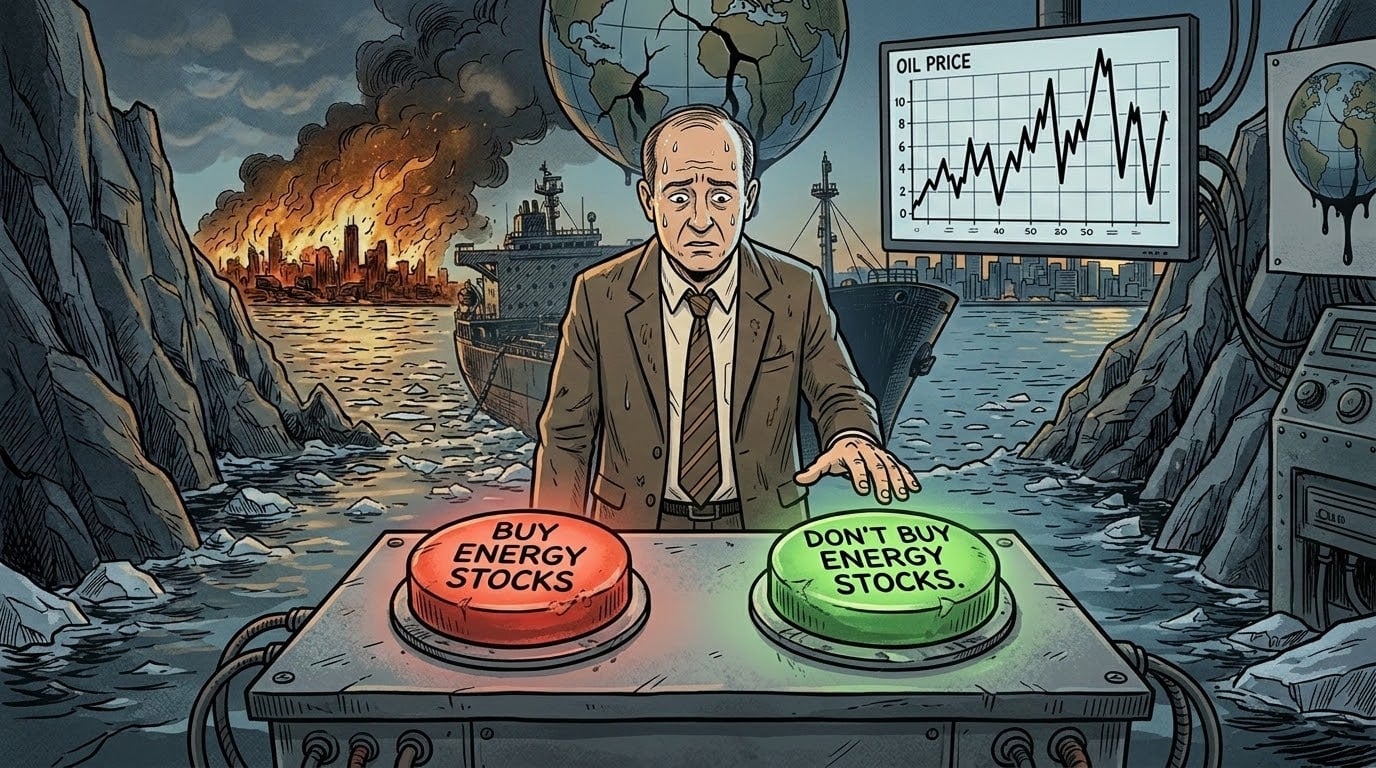

The question retail investors are asking right now is worth answering directly: Should you buy energy stocks after a 30% sector run, with oil prices falling amid hopes of an Iran deal and a ceasefire that feels both close and uncertain?
The S&P 500 energy sector has led every other sector by a wide margin this year. Brent crude surged from around $72 per barrel before the conflict to a peak above $119. The International Energy Agency called this the largest supply disruption in the history of the global oil market. The Strait of Hormuz, which carries approximately 20% of global oil consumption, has been severely restricted since late February.
Then last week, oil fell more than 5% in a single week on signals that US-Iran peace talks were making progress. It clawed some of that back when fresh US strikes on Iran revived supply disruption fears. As of this writing, Brent is trading around $99.
The case to buy energy stocks today is not simple. It depends on the scenario you have to choose before you invest.
Buy Energy Stocks Now? The Valuation Case Is Not as Stretched as the Price Action Suggests
A 30% to 45% sector run sounds like a trade that has already happened. Valuation tells a different story.
Even at current oil prices near $94 per barrel, integrated energy majors are trading at free cash flow yields of 8% to 12%, significantly above the broad market average. Free cash flow yield measures what a company is actually generating relative to what you are paying for it. It is not a commodity price bet. It is a business earnings argument.
At Brent prices of $75 to $80, which would represent meaningful post-deal normalization, the largest integrated producers remain profitable and dividend-covered. Exxon Mobil, Chevron, and ConocoPhillips all entered 2026 with break-even costs well below $50 per barrel and strong balance sheets. The war premium inflated their share prices, but it also inflated their earnings enough to maintain reasonable valuations even after a partial oil price retracement.
The case to buy energy stocks at this stage is not that oil will stay at $100. It is that the companies generating cash at $100 oil will not suddenly become cash-incinerators at $80 oil.
If you are drawn to a broader approach rather than picking individual names, the Vanguard Energy ETF (VDE) covers 112 US energy companies across drilling, production, transportation, and refining at an expense ratio of 0.09%. For investors who want to think systematically about building positions in sectors with durable cash flow rather than chasing price momentum, Just Keep Buying by Nick Maggiulli offers a data-driven framework for exactly that discipline.


Even a Deal Won’t Normalize Supply Immediately
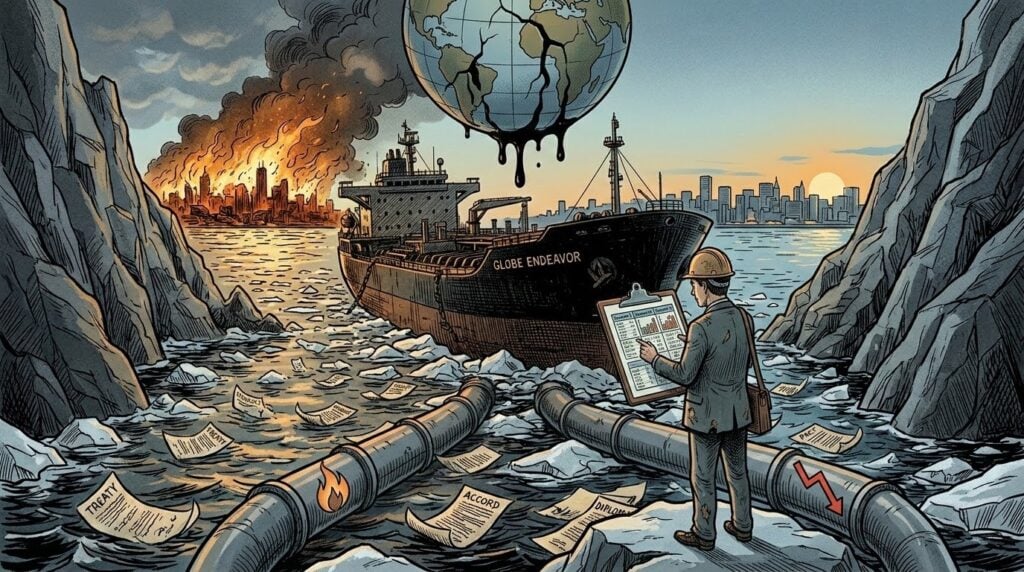
This is the part of the Iran trade that most investors underestimate.
Even if a peace agreement is signed tomorrow, the logistics of reopening the Strait of Hormuz take months, not days. Tanker operators need confidence that the route is genuinely safe before resuming large-scale traffic. Strategic petroleum reserves drawn down during the conflict need to be replenished. Infrastructure damaged during hostilities needs to be assessed and cleared.
Analysts at Hargreaves Lansdown stated that prices are unlikely to return to the pre-conflict $60 to $70 range even after a deal. The market is not simply going to reset to February 2026 levels. Iran’s foreign ministry has already signaled that navigation of the Strait “will have costs,” raising the possibility of a permanent transit toll structure that would embed a structural risk premium into oil prices regardless of ceasefire status.
Citigroup noted in a late-May research note that even as investors priced out worst-case supply disruption scenarios, uncertainty over deal timing was keeping central banks on alert. Energy-driven inflation has already produced what Citi described as second-round effects through the broader economy, prompting some central banks to grow more hawkish. That monetary backdrop does not resolve the day a deal is signed.
The supply disruption that created this trade will outlast the headline that ends it.
Energy Remains One of the Few Inflation Hedges Still Generating Income
Investors trying to hedge against inflation in 2026 have found the options limited. Bonds have offered less real yield cushion as central banks navigated the energy-driven price spiral. Technology stocks compressed on higher rate expectations.
Energy stocks did something different. They went up and kept paying dividends.
The major integrated producers maintained or increased dividends through the conflict. The Vanguard Energy ETF carries a dividend yield of around 2.4%. That compounds on top of price appreciation without requiring oil to stay above $100.
There is a portfolio construction argument here that is separate from the geopolitical trade. Energy has been negatively correlated to the technology sector’s compression this year. In a portfolio where large-cap tech has been under pressure from rate sensitivity, energy has provided real ballast. Financial planners generally treat sector tilts as satellite allocations, typically 5% to 10% of a portfolio, rather than wholesale rotation plays. At that sizing, the downside of a deal-driven oil price retracement is manageable, and the upside of a prolonged disruption scenario is meaningful.
The One Reason to Pause: You May Be Buying the Peak of the Risk Premium
Here is where the picture gets harder.
The consensus view among investors right now is that a deal is close and oil will fall further. Every time that view has gained traction over the past three months, fresh hostilities have revived the supply disruption premium. But the consensus view eventually becomes correct. Deals do close. Hormuz does reopen. And when it does, the $20 to $25 war premium currently embedded in Brent prices begins unwinding.
CNBC reported on May 28 that oil markets are betting on a swift end to the Iran war, and that investors may regret it. The warning cuts both ways. Markets that price in a swift resolution and do not get one will see energy remain elevated. But investors who buy energy stocks at peak risk premium pricing, right before a deal closes, absorb the full retracement.
The honest framing is this: the entry opportunity in energy stocks was in February and March. Investors who recognized the supply disruption early captured the full move. Investors entering today are entering a market that has already priced a significant portion of the disruption and is now oscillating around deal uncertainty. That is a harder risk-reward than the original thesis.
This does not mean the trade is over. It means the margin for error is narrower.
Should You Buy Energy Stocks Now? 3 Scenarios, 3 Different Answers
The council is split on this. Those who favor systematic accumulation argue that chasing a sector after a 30% run based on a geopolitical event is exactly the behavior that destroys long-run returns. Others argue that the macro and fiscal environment — expanding deficits, energy-driven inflation, and a depleted strategic petroleum reserve — supports elevated energy prices regardless of whether a deal closes. Both positions have merit. The right answer depends on which scenario plays out.
If a deal closes and verified ship traffic through the Strait of Hormuz resumes within 30 days, the war risk premium begins to unwind. New energy positions entered at current prices carry a compressed margin of safety. Existing holders should evaluate whether they are holding a business position or a geopolitical trade and size accordingly. If you are holding for dividends and free cash flow, the business case remains intact at lower oil prices. If you are holding for price appreciation driven by $100-plus Brent, the thesis weakens.
If peace talks drag through Q3 without resolution, the fiscal inflation argument holds. Central banks remain on alert. The supply disruption persists. A 5% to 10% satellite allocation in integrated energy majors or a broad energy ETF is consistent with the macro regime. Review at the end of the third quarter.
If conflict re-escalates, a position in energy functions as a portfolio hedge against the kind of inflationary shock that compresses real returns everywhere else. In that scenario, the entry price at current levels looks reasonable in retrospect. Do not chase momentum further. The hedge is already working.
Regardless of which scenario you believe, investors in a total market index already own energy stocks at their market-cap weight and have captured a portion of this year’s rally without any additional action. The decision to add deliberate concentration above that baseline is a bet on one of these three scenarios. Be clear about which one you are expressing before you act.
For educational purposes only. Not financial advice.
Frequently Asked Questions:
Is it too late to buy energy stocks after the sector’s 30% run this year?
It depends on your scenario. Integrated oil majors are still generating strong free cash flow at current prices, but a peace deal that reopens the Strait of Hormuz could unwind a meaningful portion of the war risk premium that drove the rally.
What happens to oil prices if the US-Iran peace deal goes through?
Analysts expect oil to fall, but not to pre-war levels. Even after a deal, reopening the Strait of Hormuz, restoring tanker confidence, and replenishing strategic petroleum reserves will take months, keeping prices structurally elevated above the pre-conflict $60 to $70 range.
What energy ETFs give broad sector exposure without single-stock risk?
The Vanguard Energy ETF (VDE) covers 112 US energy companies across drilling, production, and transportation at an expense ratio of 0.09%. The Energy Select Sector SPDR Fund (XLE) offers similar diversification with higher concentration in mega-cap integrated majors.
How much of my portfolio should be in energy stocks right now?
Most financial planners treat sector tilts as satellite allocations, typically 5% to 10% of a portfolio, rather than core positions. The energy trade is scenario-dependent, which means position sizing should reflect how much of a retracement you can absorb if a deal closes faster than expected.