

The Federal Reserve held rates steady at its June meeting, and income investors exhaled. Dividend stocks, which had spent months repricing around shifting rate expectations, finally had something that looked like clarity: the Fed was on hold, the pause was intact, and the income case for yield-bearing equities seemed as clean as it had been in years.
That reading is half right and half dangerous.
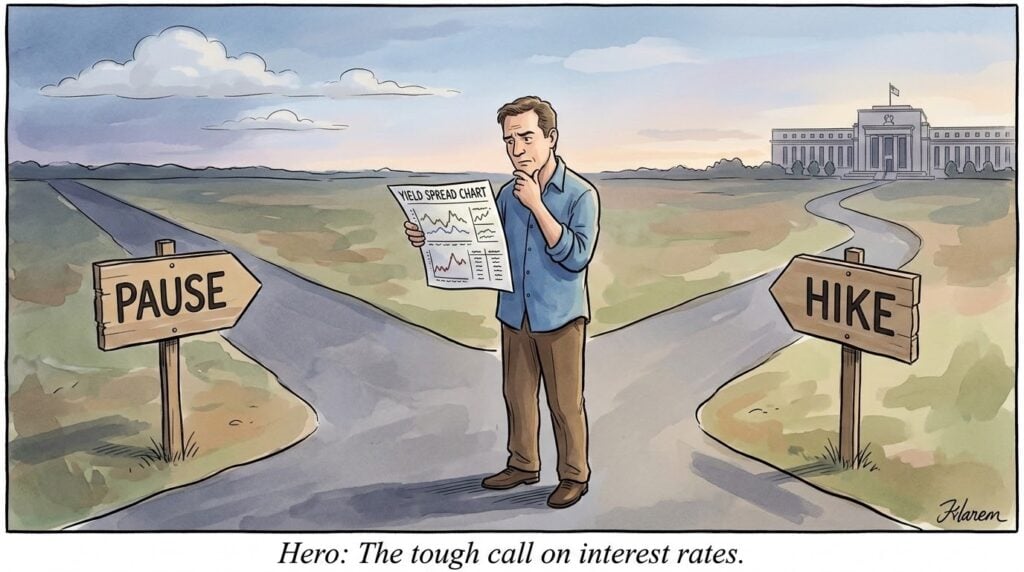
The June FOMC decision held the federal funds rate at 3.50–3.75%, a fourth consecutive pause and the first meeting under new Fed Chair Kevin Warsh. What the headlines didn’t lead with: nine of 18 Fed officials now project at least one rate hike before the end of 2026. Six of those nine project rates rising 50 basis points or more. The dot plot shifted sharply in the hawkish direction. The PCE inflation forecast was revised up to 3.6% from 2.7% in March. Forward guidance was eliminated entirely — Warsh dropped it on his first day in the chair.
The gap between the decision markets saw and the dot plot they didn’t read carefully is exactly where dividend stocks get repriced.
The Rate Environment Underneath the Pause
The pause is real. What it isn’t is a signal that the rate environment has resolved.
A pause inside a fiscal environment where deficits are expanding and PCE is running at 3.6% is not the same as a pause inside a cooling economy. Those are two different regimes, and dividend stocks behave very differently in each one.
In a genuine disinflation pause — rates on hold because inflation is falling toward target — rate-sensitive dividend sectors like utilities and REITs get a tailwind. Their borrowing costs stabilize, their yield spreads look attractive against Treasuries, and capital rotates in. That was 2019. That was late 2023.
This is not that. The April FOMC minutes showed an 8-4 dissent vote, the first split of that magnitude since 1992. A majority of officials noted that “higher rates might become necessary” if inflation stays above target. Citadel released an analysis the morning after the June decision warning that easy financial conditions, an accelerating labor market, and a projected $750 billion AI capital expenditure cycle in 2026 are driving inflation breadth across the economy — and that second-round effects could force a September hike regardless of what happens to energy prices.
That is not background noise for dividend investors. That is the primary risk to the income thesis.
Why Dividend Stocks Feel the Rate Gap First
Rate-sensitive dividend sectors don’t just underperform when rates rise. They reprice from the moment the market starts believing rates might rise.
Not all dividend stocks respond to rate moves the same way. The ones that get hurt fastest when the market shifts from “pause” to “hike” are the ones whose valuation depends on yield spread — the gap between what they pay and what risk-free Treasuries yield.
Utilities and real estate investment trusts are the clearest examples. Both carry heavy debt loads refinanced at prevailing rates. Both compete directly with Treasury yields for income-seeking capital. When rates rise, borrowing costs go up and yield spread advantage narrows simultaneously. The 2022 drawdown is the reference case: interest rates rising compressed valuations in rate-sensitive dividend sectors even as their businesses remained operationally sound.
The income case for dividend stocks isn’t wrong. It’s incomplete without a stress test against the rate environment the position is being bought into.
Here’s the check worth running: take the forward dividend yield of any position you hold or are considering, subtract the 10-year real Treasury yield, and look at the spread. With the 10-year currently running around 4.5%, a utility or REIT yielding 4.8% is offering a 30-basis-point spread — almost nothing. That investor is being compensated almost entirely in equity risk for a position that is supposed to be defensive income. If rates move up 50 basis points on a September hike, that spread compresses further and share price adjusts accordingly.
Dividend payers with pricing power in inflationary environments, such as energy producers, midstream pipeline operators, and select materials companies, carry far less of this sensitivity. Their revenues move with commodity prices, their cash flows don’t depend on cheap refinancing, and their dividend coverage doesn’t erode the way a utility’s does when debt service costs rise.
Which Dividend Stocks Hold Up and Which Don’t
Where you stand in your investing timeline matters more than which sectors looked best in last quarter’s yield screen.
- If you’re in the accumulation phase with more than ten years before you need this money: the rate-hike risk is a headwind, not a thesis-breaker. The data on systematic, consistent dividend reinvestment is unambiguous — investors who kept buying and reinvesting through 2022, through rate uncertainty, through every dot plot revision, outperformed those who rotated out waiting for cleaner conditions. A diversified dividend ETF like SCHD or VYM, purchased on a regular schedule with dividends reinvested automatically, removes the execution layer from the equation. The rate cycle will resolve before your time horizon does.
If you want to understand why the accumulation math works even in difficult rate environments, Nick Maggiulli’s Just Keep Buying lays out the data in plain language.


Disclosure: TheCapitalist.com participates in the Amazon Associates program. Purchases made through this link may generate a commission at no cost to you.
- If you’re within five years of retirement and holding rate-sensitive dividend sectors: this is where the dot plot matters. Utilities and REITs priced at thin yield spreads are carrying asymmetric risk right now. Run the spread check. If you’re being compensated less than 150 basis points above the real 10-year Treasury yield for holding equity risk in a rate-sensitive sector, consider whether pricing-power dividend payers — energy, midstream, select industrials — serve the same income need with less rate exposure. The June FOMC decision made the stakes of that distinction concrete.
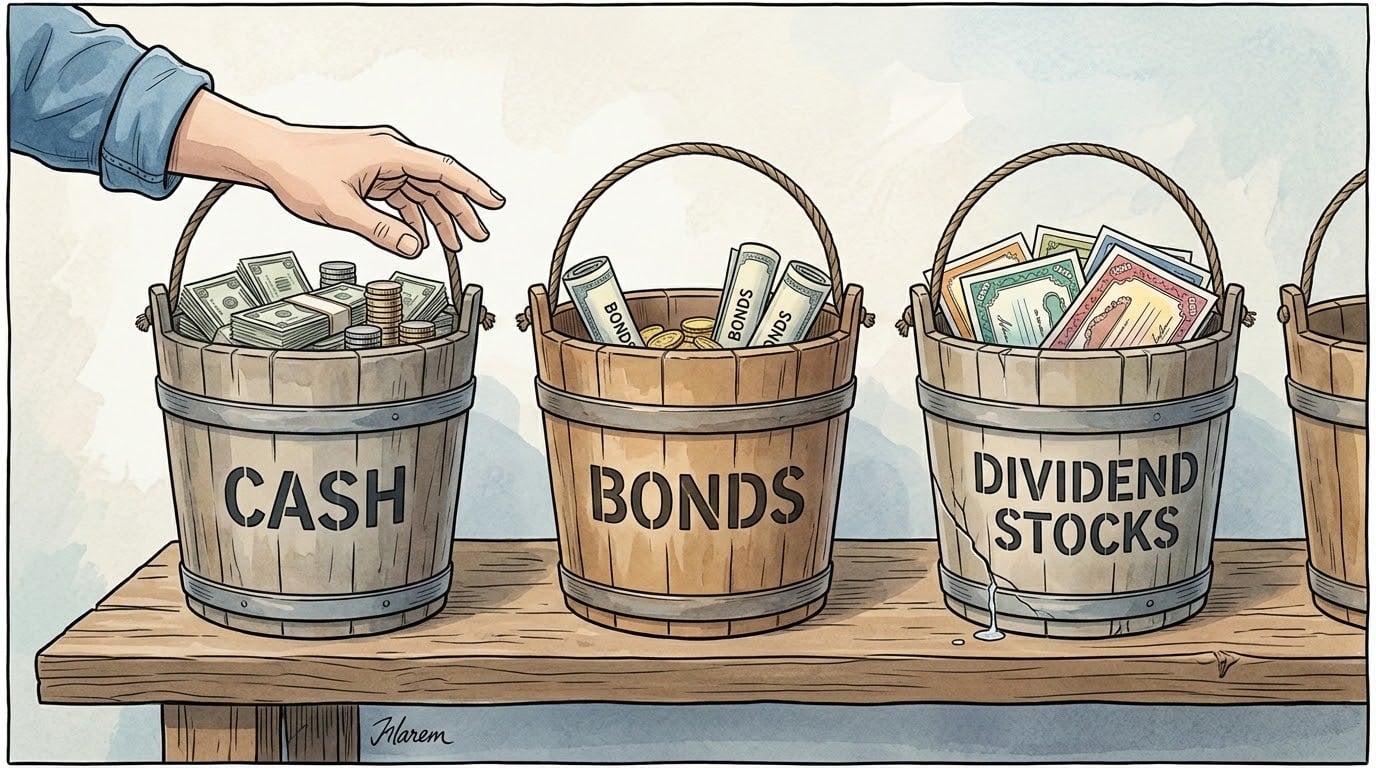
- If you’re already retired and drawing from your portfolio: dividend stocks are Bucket 3 assets. They fund spending five, ten, fifteen years from now — not next year’s bills. Near-term spending needs belong in cash or short-term CDs, both currently yielding 4% or better. Funding your next 18 to 24 months of expenses from a short CD ladder removes the sequence-of-returns risk from your equity income positions entirely. If September brings a rate hike and utilities sell off, you don’t have to sell anything — your near-term liquidity is already funded.
What September’s FOMC Will Tell You
The data between now and September either builds the case for a hike or dismantles it. You don’t need to predict, you just need to know which of your positions are exposed to the gap.
There is a scenario where the hawkish June dot plot doesn’t materialize. If the US-Iran peace agreement holds and oil sustains a move toward $75 per barrel, the disinflationary case builds. Sustained lower energy prices feed into a cooler July CPI print. A softer CPI could give the Fed cover to hold again in September and revise the dot plot back toward neutral.
That sequence of oil falls, July CPI misses to the downside, and September holds is the scenario where rate-sensitive dividend stocks catch a bid.
The metric to watch is the spread between the 10-year Treasury yield and the S&P 500 dividend yield. That spread is currently near its tightest levels in years. If the 10-year falls on soft CPI data, the spread widens and rate-sensitive dividend stocks get relief. If the 10-year holds or rises on another inflation surprise, the spread compresses and those positions face more pressure. Understanding how interest rates affect stocks is the foundation for reading which way that spread is moving.
The Verdict
The pause is a window. Size your exposure to the risk that it closes.
The June hold is real. The dot plot is also real, and nine officials projecting higher rates: six of them by 50 basis points or more, with a Fed chair who eliminated forward guidance on his first day in the chair is not a backdrop that rewards concentrated positions in rate-sensitive dividend sectors at thin yield spreads.
Dividend stocks as a category aren’t broken. The income thesis isn’t wrong. But dividend stocks span a wide spectrum — from rate-sensitive utilities and REITs whose valuations compress when rates rise, to durable, pricing-power cash flow machines that generate income regardless of the rate cycle. The pause benefits the headline. A September hike would not hurt every dividend position equally.
Position for both outcomes. Hold quality, pricing-power dividend payers at defensible yield spreads. Fund near-term spending from cash. Let the accumulation positions compound through whatever September delivers.
For educational purposes only. Not financial advice.
Frequently Asked Questions
What happened to dividend stocks after the June 2026 Fed meeting?
The Federal Reserve held rates at 3.50–3.75% for the fourth consecutive meeting in June 2026, which provided short-term relief for rate-sensitive dividend sectors like utilities and REITs. However, the updated dot plot showed nine of 18 officials now project at least one rate hike before year-end, adding a new layer of uncertainty to the income investing outlook for the second half of 2026.
Are utility stocks and REITs still good dividend stocks to own right now?
Utilities and REITs are among the most rate-sensitive dividend stocks because they carry heavy debt and compete directly with Treasury yields for income-seeking capital. At current yield spreads where many utilities and REITs yield only marginally more than the 10-year Treasury, the margin of safety against a September rate hike is thin. Investors within five years of retirement or already drawing income should assess their spread exposure before adding to these positions.
What dividend stocks hold up better when interest rates rise?
Dividend payers with pricing power in inflationary environments tend to hold up better when rates rise. Energy producers, midstream pipeline operators, and select materials companies generate revenues that move with commodity prices rather than depending on cheap debt refinancing. Their dividend coverage is less sensitive to rate increases than utilities or REITs, making them structurally less exposed to a September hike scenario.
Should I stop buying dividend stocks until after the September FOMC meeting?
Long-horizon investors in the accumulation phase, or those with more than ten years before they need the money, have historically outperformed by continuing systematic purchases through rate uncertainty rather than pausing to wait for cleaner conditions. The September FOMC matters most to investors within five years of retirement or already drawing income. For those investors, assessing rate-sensitive sector concentration before September is a more targeted action than stopping all dividend stock purchases entirely.
Researched and fact-checked by the TheCapitalist.com editorial team using a multi-source framework. Institutional citations verified. Contradictory expert positions represented. See our editorial standards.