

American automotive icon Ford Motor Company will split its auto business into two separate units. Ford Blue will handle its legacy business involving internal combustion engines.
Meanwhile, Ford Model E will oversee its electric vehicle production. In addition, another subunit, Ford Pro, will concentrate on its commercial customers.
RELATED: Ford Has A Lot Riding On The Electric F-150
‘Sometimes, Two is Better Than One’
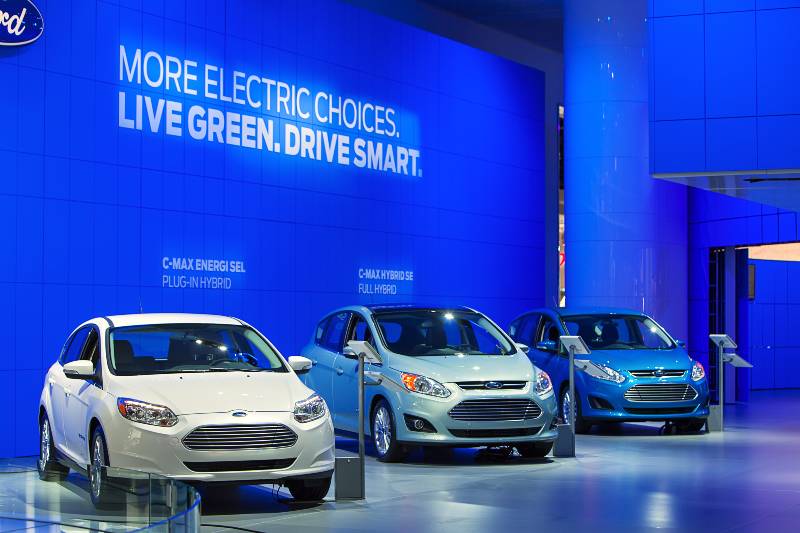 Wall Street hailed Ford’s initiative to restructure its company. Stocks ticked upwards as investors applauded as Ford will renew its focus on growing its EV business. In fact, Bank of America said that “Sometimes, two is better than one”. Meanwhile, Jefferies called Ford’s decision a “Creative move”. Previously, some analysts pushed for Ford to spin off its electric auto business into an independent entity. They see more potential in Ford’s EV unit if it operated completely separate from its gas-powered counterparts. By becoming future-focused and growth-oriented, Ford’s EV unit can generate high valuations enjoyed by rivals such as Tesla and Rivian. At the same time, an entirely separate electric vehicle can enjoy various incentives given by the government for consumer products that run on clean energy.
Ford Will Keep All Its Business Under A Single Umbrella
However, Ford CEO Jim Farley believes that spinning off the EV business doesn’t make sense at this time. By keeping all units under a single corporate umbrella, Ford can share technology and capital. Ford Model E can benefit from the cash flow and economies of scale from the company’s traditional business. Meanwhile, Ford Blue can piggyback from technological innovations that are typical in software-driven EV companies. According to Farley, “Model E will nurture the talent and the culture and the intensity of a high-tech start-up. Blue will be a profit and cash engine for the entire enterprise.”
Strong Demand For Electric Vehicles, While Raking in Profits From Legacy Auto Business
In fact, Ford experienced strong demand for its electric vehicles like the F-150 Lightning and Mustang Mach E. At the same time, the company continues to generate large profits from its legacy auto business. In particular, large trucks and pickups are popular Ford moneymakers year in and year out. In its more than a century of existence, Ford made a lot of efforts to create an electric vehicle. Prior to its latest push, Ford created numerous plug-in concepts, production models, and gas-electric hybrids. However, its serious push into EV started in 2019 when it unveiled its all-electric models. With public interest in its EVs getting stronger, Ford commits to increase the production of its battery-powered cars and trucks. By 2026, Ford will ramp its production to 2 million electric vehicles a year. By then, this number will now represent a third of the company’s worldwide output. This puts Ford on track with its pledge to produce zero-emission-only vehicles by 2040.
Ford Not Yet Giving Up Its Internal Combustion Auto Business
Unlike its rivals, Ford has yet to totally give up on its gas-powered vehicles. Farley said that some EV technology just doesn’t fit some trucks and SUVs. “Although maybe the volumes go down … I think we’ll see a really revitalized [internal combustion engine] business,” he said. Meanwhile, the entire auto industry remains undecided on the timeline to phase out internal combustion vehicles entirely. Watch the CNBC Television video reporting that Ford to split electric vehicle, internal-combustion engine businesses into separate units:
Do you agree with Ford’s decision to split its auto business into two separate units? Also, do you agree with the advantages of doing so?
Tell us what you think. Share your thoughts in the comments section below.