

Gold prices surged to historic highs in early 2026, then corrected sharply. The selloff was not a collapse in gold demand. It was a direct consequence of oil, inflation, and Federal Reserve policy.
Gold traded near $4,327 an ounce on June 9 after pulling back from earlier 2026 highs. Lower oil prices helped stabilize gold that day, but traders were still focused on inflation data and the June 17 Federal Reserve meeting, according to Reuters.
The important point for investors is this: gold can fall during a geopolitical crisis if that crisis pushes inflation higher and keeps the Fed restrictive. That is what happened in 2026.
Gold Prices in 2026: The Key Drivers
| Driver | Impact on gold |
|---|---|
| Higher oil prices | Raises inflation pressure |
| Higher inflation | Keeps the Fed restrictive |
| Higher real rates | Hurts non-yielding gold |
| Lower oil prices | Can reduce the rate pressure on gold |
| Central bank buying | Supports the long-term gold thesis |
What Caused Gold’s Record Run
Gold’s record run was supported by three forces: central bank buying, investor demand, and concern over currency stability.
The World Gold Council reported that Q1 2026 gold demand reached 1,231 tonnes, while demand value surged to a record $193 billion. Buying of gold-backed exchange-traded funds (ETFs) continued in Q1, and central banks bought 244 tonnes of gold on a net basis despite higher prices and an uptick in sales.
Central bank demand matters because central banks do not buy gold the way traders do. They are not looking for a quick swing trade. They are diversifying reserves.
J.P. Morgan expects central banks to buy about 755 tonnes of gold in 2026. That is below the 1,000-plus-tonne pace of the prior three years, but still well above the pre-2022 range of roughly 400 to 500 tonnes.
That is the structural case. Gold is not only a fear trade. It is a reserve asset, a currency hedge, and a portfolio diversifier when investors lose confidence in paper claims. Deficits were high. Trade tensions were elevated. Central banks were still diversifying. Investors wanted an asset outside the usual paper system. Then the short-term mechanics changed.
Why Gold Prices Fell When War Risk Increased
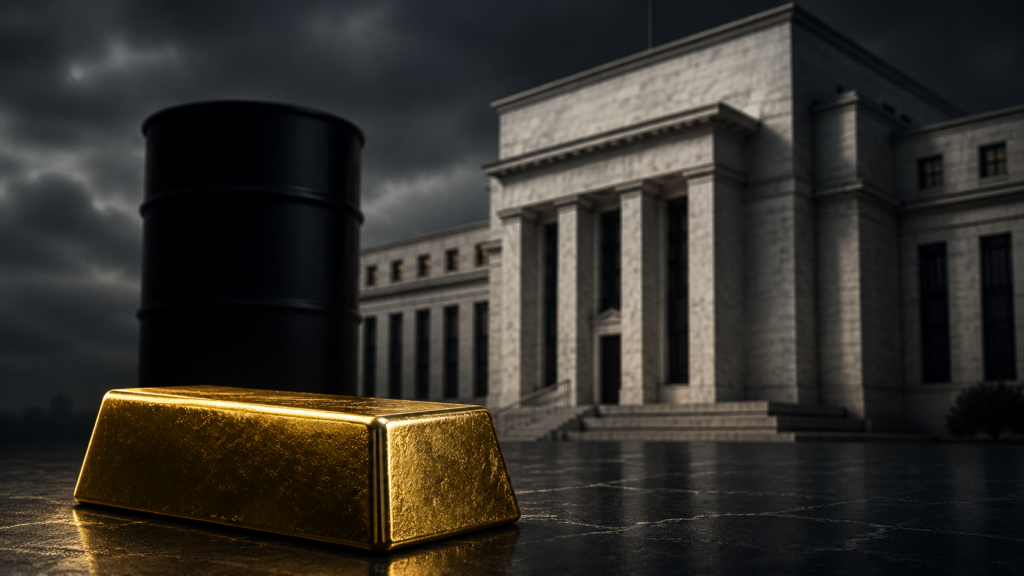
Gold fell because the conflict changed the inflation outlook.
Normally, war risk supports gold. Investors buy it when they want protection from geopolitical instability. But in 2026, the conflict also pushed oil prices and inflation risk higher. That shifted the market’s attention back to the Federal Reserve.
Gold pays no income. When real rates rise or stay elevated, investors can earn more from cash and bonds. That raises the opportunity cost of holding gold.
Reuters reported that gold fell on June 3 as war-driven inflation worries increased expectations that interest rates could remain elevated. Lower oil prices helped stabilize gold on June 9, but rate-hike fears remained a key constraint.
The New York Federal Reserve’s May survey showed one-year inflation expectations at 3.5%, with three-year and five-year expectations at 3.1% and 3.0% respectively. April personal consumption expenditures (PCE) inflation stood at 3.8%, still well above the Fed’s 2% target.
That explains the correction. The market was not saying gold is useless. It was saying the Fed may stay tighter for longer.
Is the Long-Term Gold Thesis Still Intact
Yes, but it should be sized correctly.
The long-term thesis is still based on deficits, reserve diversification, geopolitical risk, and currency debasement. None of those disappeared because gold corrected.
Central bank buying is still elevated. Investor demand is still present. Gold-backed ETF demand continued in Q1 2026, though at a slower pace than the strong Q1 2025 inflows.
But the counterargument matters.
Gold produces no earnings. It pays no dividend. It does not compound like a business. If inflation falls, real rates rise, or the dollar strengthens, gold can underperform for long periods.
That means gold should be treated as portfolio insurance, not a full portfolio strategy. A moderate allocation can help diversify risk. An oversized allocation can become a speculative bet.
Your Next Move Depends on Something Other Than War Headlines
Gold’s next move depends less on war headlines and more on the Fed’s reaction to them.
- If oil stays elevated, inflation stays sticky. If inflation stays sticky, the Fed has less room to cut. If the Fed cannot cut, real rates stay firm. That keeps pressure on gold.
- If oil breaks lower, the setup changes. Inflation pressure cools. Rate-cut expectations can return. Real rates ease. Gold gets the macro tailwind it lost during the correction.
That means the gold trade now has two triggers:
| Trigger | Effect on gold prices |
|---|---|
| Oil stays high | Gold stays vulnerable because the Fed remains boxed in |
| Oil falls sharply | Gold improves because rate-cut expectations can return |
| Inflation data cools | Bullish for gold through lower real-rate pressure |
| Fed stays hawkish | Bearish or sideways for gold |
| Central bank buying continues | Supports the long-term floor, not the short-term price |
The takeaway: do not buy gold simply because the headlines look dangerous. Buy it only if it has a defined role in your portfolio.
Portfolio guidance disclosure: The following section is educational and general. It is not personal investment advice. Allocation decisions depend on income needs, tax situation, risk tolerance, time horizon, and total portfolio structure.
If You Don’t Own Gold
Do not chase the old high. Use the correction to decide whether you want a permanent hedge against dollar weakness, fiscal stress, and central bank reserve shifts. For many investors, that means a small position, not a bet-the-portfolio trade.
If You Bought Near the High
The correction hurts, but the thesis has not automatically failed. The selloff was driven by rates, not by a collapse in gold demand. If your reason for buying was long-term insurance, selling now turns a hedge into a panic trade.
If You Are Near Retirement
Keep gold out of the spending bucket. Money needed in the next one to three years belongs in cash, short-term Treasurys, certificates of deposit (CDs), or other stable reserves. Gold belongs only in the long-horizon sleeve, where volatility can be absorbed.
If You Want ETF Exposure
Stick with physically backed funds for a core holding. GLD is the liquidity vehicle. IAU is the lower-cost mainstream option with a 0.25% sponsor fee, designed to reflect the price of gold bullion less expenses. Futures-based gold products are trading tools, not retirement hedges.
For readers who want a deeper framework for debt, deficits, and currency risk, Broken Money is a useful background resource before building a long-term gold allocation.
No products found.
Disclosure: We may earn a commission if you purchase through our educational partner link.
Frequently Asked Questions:
Are gold prices still attractive after the correction?
Gold prices are more attractive than they were at the high, but the setup still depends on rates. If inflation cools and real rates fall, gold’s macro backdrop improves. If inflation stays high and the Fed remains restrictive, gold can stay under pressure.
Why did gold fall when war risk rose?
Gold fell because war risk raised oil and inflation pressure. That kept the market focused on the Fed. Higher real rates make gold less attractive because it pays no income.
How much gold should investors own?
Gold should usually be a modest hedge, not a dominant position. A small allocation can diversify currency and inflation risk. A large allocation can add volatility and reduce exposure to productive assets.
What is the best way to own gold in 2026?
Physically backed ETFs are the simplest option for many investors. Coins and bars add storage, insurance, bid-ask spread, and tax complexity. Futures-based products are better suited for experienced traders, not core portfolio hedging.