

Based on the latest Nvidia stock after earnings report, the semiconductor company just put up its largest quarter in its history. Revenue of $81.6 billion came in $2.8 billion above Wall Street’s consensus estimate of $78.8 billion, up 85% from the same quarter a year ago. Data center revenue hit $75.2 billion, up 92% year over year. That single revenue line is now larger than the entire annual revenue of most semiconductor companies.
Non-GAAP earnings per share came in at $1.87 against a consensus estimate of $1.77. The company guided Q2 FY2027 revenue to $91 billion, a midpoint that cleared Wall Street’s prior estimate of $86.8 billion by $4.2 billion. The board authorized an additional $80 billion in share repurchases and raised the quarterly dividend from one cent to 25 cents per share.
CEO Jensen Huang closed the earnings call with a verdict: “This was an extraordinary quarter. Demand has gone parabolic.”
Then the stock slipped 1.5% in after-hours trading.
The Nvidia Stock After Earnings Report: 5 Straight Quarters of Beat and Fall
This is not a new pattern. Nvidia has beaten Wall Street’s revenue estimates in every quarter of the current AI cycle, typically by 3 to 4 percent. The stock has closed lower on four of its last five post-earnings sessions. After the fiscal fourth quarter 2026 report in February, shares fell 5% despite a 73% revenue gain. The two quarters before that produced drops of 3% and 0.8%.
The pattern has a straightforward explanation. In the weeks before each print, institutional models and buy-side whisper numbers move above the published consensus. A beat that clears the official bar but falls short of the internal bar produces a red candle. That is what happened Wednesday night. The Q2 guidance at $91 billion was a genuine upside surprise against a published consensus of $86.8 billion. It was not sufficient to clear every internal model.
This is not a reason to sell. It is a reason to understand what you actually own and at what price.
The Valuation Math Behind the Red Candle
Here is a number that does not get enough attention. Nvidia is now trading at roughly 24 times forward earnings. Its 10-year average price-to-earnings ratio is approximately 36 times. On that measure alone, the stock is cheaper than it has typically been.
The complication is that forward earnings estimates have been rising rapidly. Consensus for Nvidia’s fiscal 2027 net income has climbed 13% over the past three months, per Bloomberg data. The stock has not kept pace with those revisions, which is how a company growing revenue at 85% arrives at a below-average multiple.
Jeffrey Blazek, co-chief investment officer of multi-asset at Neuberger Berman, which manages $567 billion in assets, said it plainly: “The valuation is secondary to the fundamental growth story, which remains the primary driver, but valuations aren’t at a discomforting level.”
That is the long-term investor’s frame. It is not the pre-retiree’s frame. The right question today is not whether the company is growing. It is whether your allocation was sized for the scenario in which this stock drops 40% before recovering.
If you are working through that question, start with the data on what staying in the market actually costs versus what timing it costs. Just Keep Buying is the most rigorous data analysis of that question available to retail investors. The numbers are not what most people expect.


Long Horizon, Short Horizon, Pre-Retirement: Three Different Answers

There is no single right answer for Nvidia stock after earnings. There are three, depending on your situation.
- If Your Time Horizon Is 10 Years or More: If Nvidia represents less than 10% of your total portfolio, the data supports the holding and continuing scheduled contributions. Reacting to a 1.5% after-hours move on a record quarter historically costs more than it saves. The DALBAR Quantitative Analysis of Investor Behavior, which tracks actual investor returns against fund returns annually, consistently finds that the average equity investor trails the funds they hold because they buy after periods of strong performance and sell after periods of poor performance. This earnings reaction is that trap in reverse: selling a strong result because the price did not cooperate.
- If Nvidia Is 15% or More of Your Portfolio: At that concentration, the valuation question becomes structural. Define a hold range before you need one. A starting point: what does the stock need to deliver over the next three to five years to justify today’s price? Build a base case and a bear case with explicit assumptions. If the bear case produces a loss your portfolio cannot absorb, right-size the position now, not after the drawdown begins.
- If You Are Within Five Years of Retirement: The beat-and-fall pattern is a signal worth taking seriously. Nvidia’s own Q2 guidance includes zero revenue from China. The company’s market cap sits near $5.7 trillion. A 30% correction from current levels is not an extreme scenario for a stock at this valuation and this degree of AI cycle concentration. That kind of drawdown in the first two years of retirement is precisely what a retirement income strategy is designed to survive. Make sure your near-term spending is protected before Q2 results arrive in August.
Jensen Was in Beijing Four Days Before The Nvidia Stock After Earnings Report
There is one variable that appears nowhere in Nvidia’s Q2 guidance: China.
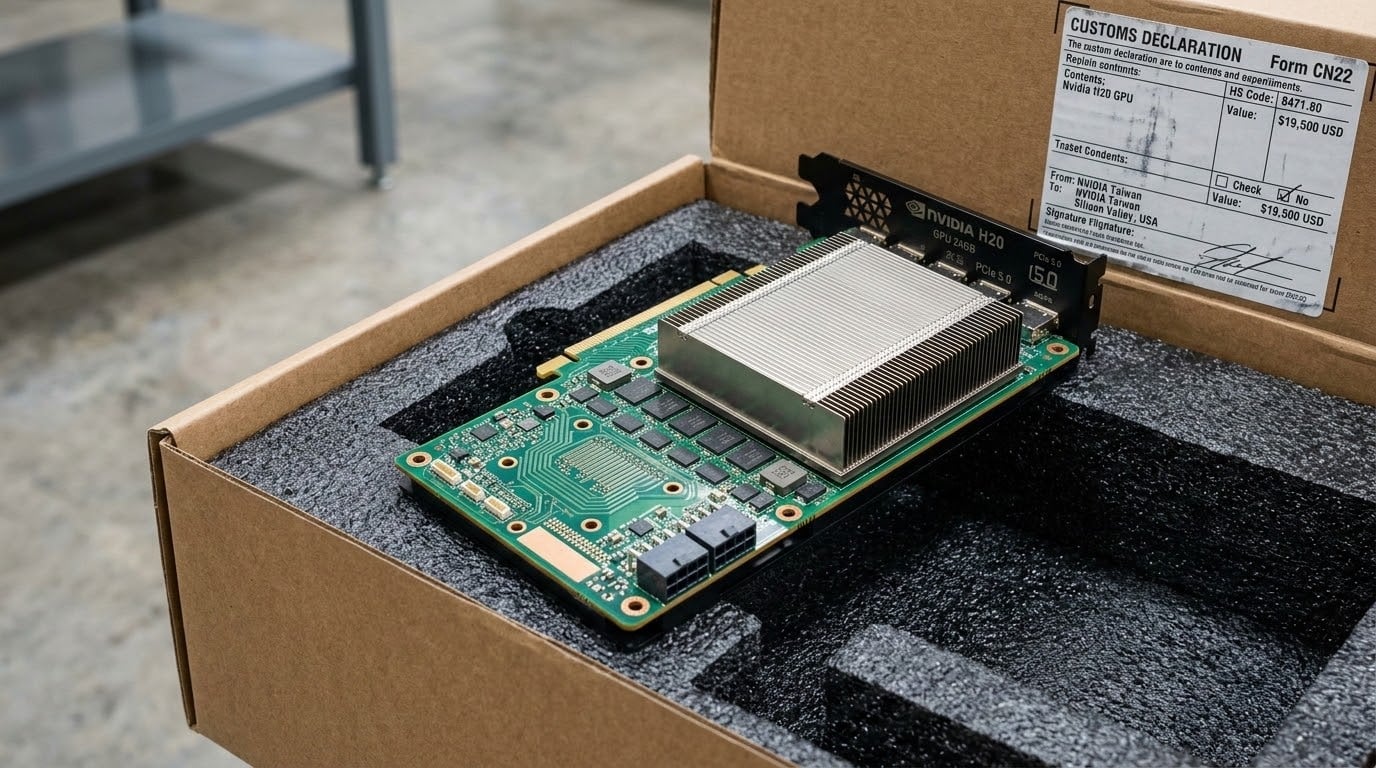
Nvidia stated explicitly that it expects no data center revenue from the Chinese market in the current quarter. Export restrictions on its H20 chips remain in place. But CEO Jensen Huang was photographed at a welcome ceremony for President Trump in Beijing on May 14, four days before Wednesday’s results. Huang said publicly he did not discuss Nvidia’s AI chips with Chinese officials during the visit.
The $91 billion Q2 guidance was built entirely on that assumption. If H20 or H200 shipments clear customs before the quarter closes in late July, the guidance could prove conservative. That potential upside is priced at zero in Nvidia’s own numbers. It is the most asymmetric variable in this story right now, and the market has not assigned it a probability.
For long-term holders, that is a reason to stay patient. For investors within five years of a capital event, it is not a reason to carry more concentration than your plan can absorb.
What to Gather from the Nvidia Stock After Earnings Report
Nvidia stock after earnings once again did exactly what it has done for five straight quarters. The company delivered a historically strong print and the stock slipped. The pattern is not a malfunction. It is a valuation signal. The business is executing. The price already knew it would.
What you do from here is a function of your time horizon and position size, not a function of whether the CEO delivered. He did.
For educational purposes only. Not financial advice. Consult a licensed financial professional before making investment decisions.
Frequently Asked Questions
Why Did Nvidia Stock Fall After Beating Earnings?
The stock had already priced in a beat before the report arrived. A routine upside surprise no longer moves it, and the market was focused on whether Q2 guidance would clear the buy-side whisper number above the published $86.8 billion consensus. Nvidia’s $91 billion guide beat the official bar, but some institutional targets were set higher.
Should I Sell Nvidia Stock After the Latest Earnings Report?
Selling is not warranted solely on a 1.5% after-hours move following a record quarter. Investors with more than 10 years and a position under 10% of their total portfolio have historically paid a higher cost for reacting than for holding through post-earnings volatility.
What Did Nvidia Guide for Q2 FY2027?
Nvidia guided Q2 FY2027 revenue to $91 billion, plus or minus 2%, approximately $4.2 billion above Wall Street’s prior consensus of $86.8 billion, with non-GAAP gross margins of 75%, plus or minus 50 basis points.
Does Nvidia’s China Revenue Exclusion Affect the Q2 Outlook?
Yes. Nvidia stated it expects no data center revenue from China in Q2. The $91 billion figure carries potential upside if H20 export restrictions ease before the quarter closes in late July, a variable Nvidia priced at zero in its own guidance.
What Is Nvidia’s Current Forward P/E Ratio?
Nvidia is trading at roughly 24 times forward earnings, below its 10-year average of approximately 36 times, a dynamic driven by consensus earnings estimates rising 13% over the past three months while the stock price has not kept pace.