
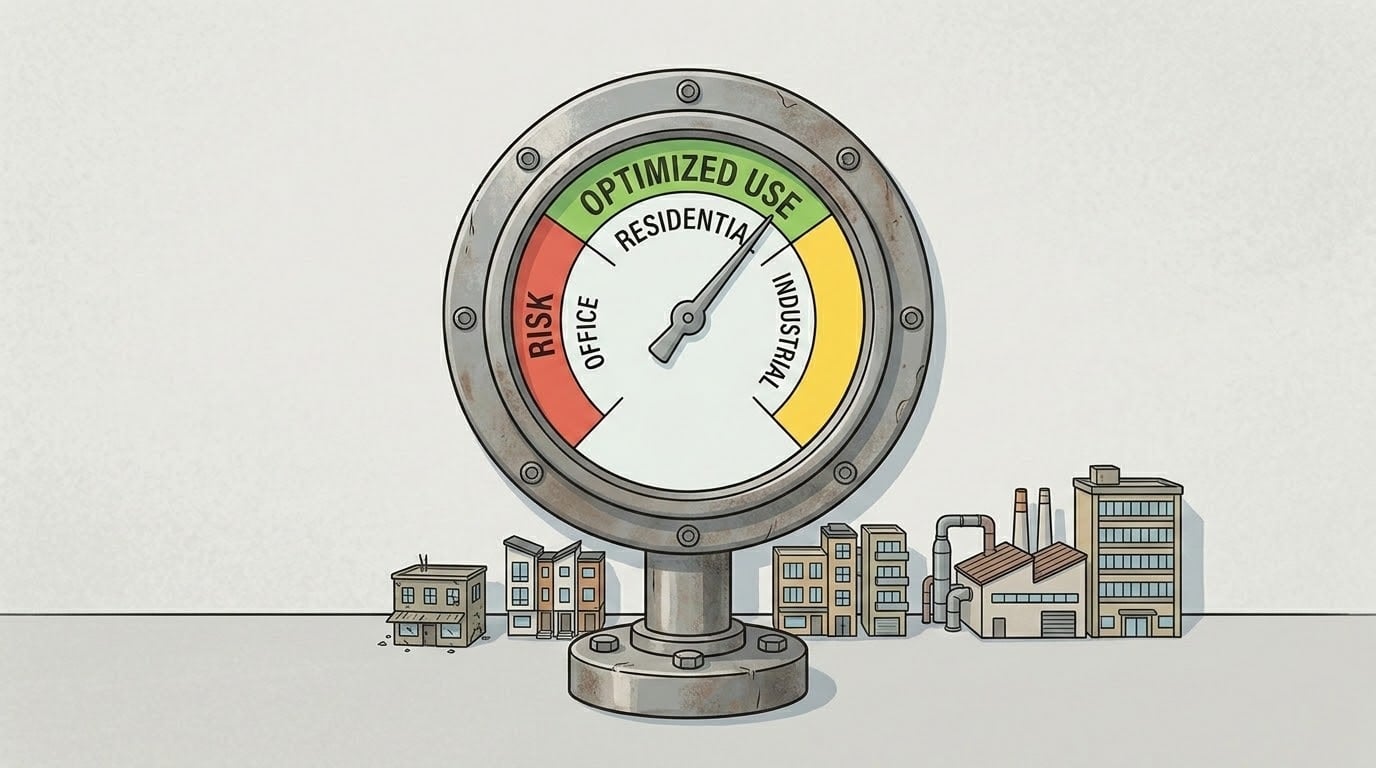

QUICK SUMMARY: VNQ has recovered 8.6% from its April 2026 low but still trades 19% below its 2021 peak. For income investors, REIT yields have not lost their income argument, but sub-sector selection is now doing all the work. Residential and industrial REITs offer defensible cash flows. Office REITs remain structurally broken regardless of what the yield number says.
REIT yields have quietly become one of the most compelling income setups in years, and most investors missed the moment that created the opportunity. The Vanguard Real Estate ETF (VNQ) hit a 52-week trough of $86.36 during the April 2026 tariff selloff. By mid-May, it had recovered to approximately $93.80, a bounce of 8.6% in under six weeks. Most income investors were not in a position for it.
This is not a new story for the sector. Real estate stocks have lagged the broader market for four consecutive years. Valuation discounts grew to their widest levels since the 2008 financial crisis. And through all of it, the same response repeated: wait for better conditions, wait for rate cuts, wait for clarity. As one portfolio manager put it plainly at the start of this year, “waiting for the macro environment to improve is not a strategy.”
The bounce from April lows does not mean the window has closed. VNQ still trades approximately 19% below its December 2021 all-time high of $116.71 on a price basis. The Morningstar U.S. Real Estate Index is up 9.36% year-to-date as of early May 2026, outperforming the broader market during that window. The sector is no longer at its lows. It is also nowhere near its peak.
The income case has not closed. The entry point has moved. Those are two different things, and confusing them is what keeps income investors on the sidelines long after the math has started working in their favor.
What Does the Fed Rate Plateau Mean for REIT Yields in 2026?
Bank of America no longer projects Fed rate cuts in 2026. Its first projected cut has been pushed to July 2027 at the earliest. The Fed chair inherits a divided committee and an inflation trajectory that has not given sufficient cover for easing.
This matters for REIT yields in a specific way. Income investors who have been treating rate cuts as the prerequisite for owning real estate stocks have been using the wrong trigger. The income argument for well-chosen REITs does not require falling rates. It requires that rates stop rising and that underlying cash flows remain intact. Both of those conditions are currently met.
The rate plateau is the investing environment. Not a transition to something else. The investors who re-entered during the April trough were not betting on cuts. They were betting on stabilization. That bet is now 8.6% ahead.
The sector’s current dividend yield sits at approximately 4%, roughly four times the yield on the S&P 500. That spread has compressed from its peak but remains historically wide relative to the rate environment. For income investors with a three-to-ten-year horizon, the income floor is real. Whether it justifies entry depends on the sub-sector.
Which REIT Sub-Sectors Still Hold Their Income Case After the April Bounce?
Three sub-sectors. Three different verdicts. The April bounce does not change any of them.
- Residential REITs are holding up because of the same dynamic locking buyers out of the housing market. Mortgage rates remain high. Inventory remains historically tight. Demand from renters priced out of ownership continues to support occupancy and rent growth for apartment and single-family rental operators. The income case here has a structural tailwind that does not depend on a Fed pivot.
- Industrial and data center REITs have a different kind of support. AI infrastructure demand is creating durable leasing momentum that is widening from primary to tertiary markets as supply constraints push tenants into new locations. Industrial real estate is benefiting from reshoring and supply chain reconfiguration trends running parallel to the tariff environment. The yield in this sub-sector has a growth component layered under the income floor. Both hold.
- Office REITs are a different story, and this is where the REIT yield argument most often breaks down for investors who screen only on the number. The NAV discount in the office looks attractive on paper. It reflects a business model problem, not a cyclical dip. Remote and hybrid work demand destruction is not reverting to 2019 levels, and vacancy data in most major markets confirms it.
Regardless of the number on your screen:
- Residential holds.
- Industrial and data center hold.
- Office is a yield trap.
For a broader look at how sector rotation affects a retirement portfolio, see Don’t Wreck Your Retirement Portfolio By Over-Relying On Stocks.
Is That High REIT Yield Real Income or a Yield Trap?

The valuation screen that separates genuine income from a yield trap: where a REIT’s implied capitalization rate exceeds its sub-sector’s 10-year historical average by 150 basis points or more, there is genuine margin of safety in the yield. Where it does not, the yield is pricing in risk rather than distributing income.
Residential and industrial REITs currently pass this screen. Office REITs do not, and the reason is structural rather than cyclical. The cap rate compression thesis for office requires a level of occupancy recovery that remote work trends make implausible in most markets. The yield is not income. It is a countdown to a distribution cut.
This is the distinction that “wide dispersion of returns” language in analyst commentary is actually describing. As one investment director noted in a January 2026 InvestmentNews survey of advisors: “there are still pockets of distress and overleverage in the sector, so the REIT sector is likely to have a wide dispersion of returns.” That dispersion is not random. It maps almost exactly to the sub-sector distinction above.
What Balance Sheet Signals Matter More Than Headline Yield?
Headline yield is the wrong entry filter for this sector, and three specific checks belong before you look at any dividend figure.
- First, the debt maturity schedule. REITs with long-dated, fixed-rate debt are insulated from the rate plateau. REITs with significant refinancing due in 2026 or 2027 are not. As one wealth manager put it: “cash flow stability and balance sheet quality matter more than headline yield.” The difference between a safe REIT position and an unsafe one is most visible here, not in the yield figure.
- Second, the credit rating. Investment-grade, BBB or higher, is the minimum for income portfolio inclusion. Below that line, the distribution is underwritten by the capital markets rather than the property cash flows. In a rate plateau, those are not the same thing.
- Third, the Funds From Operations payout ratio. FFO is the correct earnings measure for REITs, adjusted for the depreciation distortions that make standard net income unreliable in this sector. A payout ratio above 95% of FFO is a warning sign, not an income signal. It means the REIT has almost no cushion to protect the distribution if occupancy dips or financing costs rise.
A REIT that fails any of these three checks is advertising a problem, not distributing income. The yield is high because the market has already priced in the risk you are about to take on.
The underlying principle applies well beyond this sector: a financial plan designed to survive the bad scenario consistently outperforms one optimized only for the good one. Morgan Housel’s Same as Ever is the clearest treatment of that thinking available, and it is worth reading before sizing any income position in a rate-sensitive asset class.


How Much of a Pre-Retirement Portfolio Should Be Allocated to REIT Income?
REIT exposure belongs in the mid-term income allocation, covering years three through ten of planned retirement spending. It does not belong in the short-term cash reserve. It should not be funded by drawing down a bond ladder. It belongs in the growth-oriented, income-producing sleeve of the mid-term allocation, funded from equity rebalancing proceeds in years when equities are positive. For more on structuring that allocation, see What Your Advisor Hasn’t Told You About Income Investing and Fed Rate Hold Extends to a 3rd Consecutive FOMC Meeting for the rate context driving the plateau.
Size to what you will hold through another 20% drawdown without revising the strategy. That is the real entry test, and it is more important than the yield figure or the current price level. If the honest answer to that question is zero, the asset class is not the problem. The sizing is.
One condition worth naming plainly. If inflation remains above 4% through the end of 2026, even well-chosen REIT yields may not compensate for real return erosion. That is the scenario where commodity-linked income assets, which provide a more direct inflation hedge, deserve a look as a partial substitute in the income stability sleeve. It does not invalidate the yield argument for residential and industrial REITs. It creates a threshold that income investors should monitor.
The trigger is CPI sustainably above 4%. Below that level, the current sub-sector selections hold.
For educational purposes only. Not financial advice. Consult a licensed financial professional before making investment decisions.
Frequently Asked Questions:
Are REIT yields still a good investment for income after the recent bounce?
REIT yields remain above their pre-rate-hike historical averages despite the 8.6% recovery from April 2026 lows. VNQ still trades approximately 19% below its 2021 peak price. The income case has not closed, but sub-sector selection is now doing most of the work. Residential and industrial REITs offer defensible cash flows and genuine NAV discounts. Office REITs remain structurally challenged regardless of yield level.
Which REIT sub-sectors hold up best when interest rates stay high?
Residential and industrial REITs have the strongest fundamental case in a prolonged rate plateau. Residential benefits from housing supply constraints that support occupancy and rent growth. Industrial and data center REITs benefit from AI infrastructure demand and supply chain reshoring trends that operate independently of rate cuts. Office REITs face structural demand destruction from remote work and should be avoided regardless of their current yield.
How do I know if a REIT’s dividend yield is sustainable or a yield trap?
Three metrics matter more than the headline yield: the debt maturity schedule, where long-dated fixed-rate debt is far safer than near-term refinancing exposure; the credit rating, where investment-grade BBB or higher is the minimum for income portfolio inclusion; and the Funds From Operations payout ratio, where a payout ratio above 95% of FFO is a warning sign. A REIT that fails any of these checks is pricing in risk, not distributing income.
How much of a retirement portfolio should be allocated to REIT yields?
REIT exposure belongs in the mid-term income allocation covering years three through ten of planned retirement spending, not in short-term cash reserves or bond ladders. The allocation should be sized to what you can hold through a 20% drawdown without revising the strategy. Funding REIT purchases from equity rebalancing proceeds in positive market years, rather than from cash or bonds, keeps the income structure intact without disrupting near-term spending security.
What does the 8.6% REIT bounce from April 2026 lows mean for new investors entering now?
The April 2026 recovery moves the entry point but does not close the income argument. VNQ still trades approximately 19% below its 2021 peak, and residential and industrial REITs retain NAV discounts and defensible cash flows. Investors entering now are not buying the bottom, but they are not buying the peak either. Sub-sector discipline and balance sheet screening matter more than timing precision at current prices.